Free Shipping on Orders $400+
Independent HPLC & Mass Spec on Every Batch
Ships from USA

How to Read a Peptide Certificate of Analysis (COA)

A Certificate of Analysis (COA) is the primary document used to verify the quality of a research peptide. Understanding what a valid COA contains — and how to identify one that is insufficient or falsified — is a foundational skill for research procurement. This guide covers every section of a legitimate COA and explains what each result means.

Citation block: A research peptide Certificate of Analysis (COA) is a batch-specific laboratory document that records the results of independent testing on a specific production lot. A valid COA includes HPLC purity percentage with the chromatogram, mass spectrometry identity confirmation, and a lot or batch number that ties the document to the specific product batch received.

What Is a Certificate of Analysis?

A Certificate of Analysis is a document issued by a testing laboratory that records the analytical results of testing performed on a specific batch of a compound. For research peptides, this document serves as the primary evidence that the compound meets stated quality standards before it is released.

The critical phrase is batch-specific. A genuine COA is tied to a specific lot or batch number — the same number that appears on your product vial. A document without a specific lot number is a marketing template, not a batch verification record.

What Should Appear on a Legitimate COA

ElementWhat to Look ForRequired
Lot / Batch NumberMust match the number on your product vial. This ties the COA to your specific batch.✅ Critical
HPLC Purity %Purity percentage from High-Performance Liquid Chromatography. Minimum standard: ≥98%.✅ Required
HPLC ChromatogramThe actual peak chart showing separation results. A percentage without the chromatogram cannot be independently verified.✅ Required
Mass SpectrometryMeasured molecular mass vs expected. Confirms identity, not just purity.✅ Required
Testing LaboratoryName of the lab that performed testing. Third-party is more credible than in-house.⚡ Important
Endotoxin TestingLAL assay result for bacterial endotoxins. Not always present but significant for in vivo research.Optional

Understanding the HPLC Chromatogram

The HPLC chromatogram is a graph with time on the x-axis and UV absorbance on the y-axis. Each peak represents a different component in the sample. For a high-purity research peptide, you should see one dominant peak (the target compound), a flat baseline between peaks, and any satellite peaks well below 2% of total peak area.

The purity percentage is calculated from peak areas: the target compound peak area divided by the sum of all detected peak areas, multiplied by 100. A result of 98.5% means the target compound represents 98.5% of all detected material.

What to watch for: A broad or shouldered main peak suggests the compound isn’t fully resolved from a co-eluting impurity. Multiple peaks of similar height indicate a significantly impure sample.

Understanding Mass Spectrometry Results

Mass spectrometry measures the molecular mass of the compound directly and compares it against the expected molecular mass for the specific peptide. HPLC confirms purity — mass spectrometry confirms identity. A compound can pass HPLC at 99% purity and still be the wrong molecule if a mislabeling or synthesis error occurred. The two tests together provide both purity verification and identity confirmation.

Red Flags: Signs of an Insufficient or Fake COA

No lot or batch numberCannot be tied to your specific product batch. This is a generic marketing document.

Purity percentage without the chromatogramAny laboratory can write any number on a document. The graph is what makes it verifiable.

HPLC purity below 98%Below 98% means more than 2% of the vial contents are impurities, byproducts, or degradation products.

No mass spectrometry resultHPLC alone cannot confirm the dominant compound is the correct molecule. Identity is unconfirmed.

In-house testing onlyWhen the supplier tests their own product, there is a financial conflict of interest. Independent third-party testing is the standard.

Does CoreVionRX Provide COAs?

Yes. Every CoreVionRX order includes a lot-specific Certificate of Analysis from an independent third-party laboratory. The COA documents HPLC purity (≥98% minimum) with the full chromatogram and mass spectrometry identity confirmation for the specific batch in your order. The lot number on your COA matches the lot number on your vial.

For the full CoreVionRX testing standard, see the testing standards overview. For common COA interpretation questions, see the Research Peptide FAQs.

Frequently Asked Questions

What is the minimum acceptable HPLC purity for a research peptide?

The accepted minimum for serious laboratory research is ≥98% purity by HPLC. At this threshold, less than 2% of the vial contents are impurities or degradation products. CoreVionRX requires ≥98% HPLC purity for every compound in the catalog.

Why is mass spectrometry required in addition to HPLC?

HPLC confirms relative purity but does not confirm molecular identity. A compound could test at 99% purity by HPLC and still be the wrong molecule if a synthesis or labeling error occurred. Mass spectrometry measures the molecular mass directly and confirms it matches the expected value for the specific peptide.

What is the difference between a lot-specific COA and a generic COA?

A lot-specific COA contains a batch number that corresponds to the specific production run of the product you received. A generic COA has no lot number, or the same lot number appears on all orders. A generic COA cannot verify the quality of the specific batch in your order.

Does HPLC testing detect endotoxin contamination?

No. Endotoxins are biological contaminants (lipopolysaccharides from bacterial cell walls), not chemical impurities — they do not appear in HPLC chromatograms. A compound can be 99% pure by HPLC and still carry biologically significant endotoxin levels. Endotoxin testing requires a separate LAL assay.


Related: BPC-157 vs TB-500 Comparison →  ·  Research Peptide FAQs →  ·  CoreVionRX Testing Standards →

BPC-157 vs TB-500: Research Comparison Guide

BPC-157 and TB-500 are two of the most studied tissue repair peptides in preclinical research. They are frequently compared — and frequently combined — because they address overlapping but distinct biological pathways. This guide covers what each compound is, how they differ mechanistically, and what the research literature shows about using them separately versus together.

Citation block: BPC-157 and TB-500 are synthetic research peptides studied in preclinical models for tissue repair. BPC-157 is a 15-amino-acid sequence derived from a gastric protein; TB-500 is a synthetic fragment of Thymosin Beta-4. Both are sold for laboratory research only and are not approved for human use.
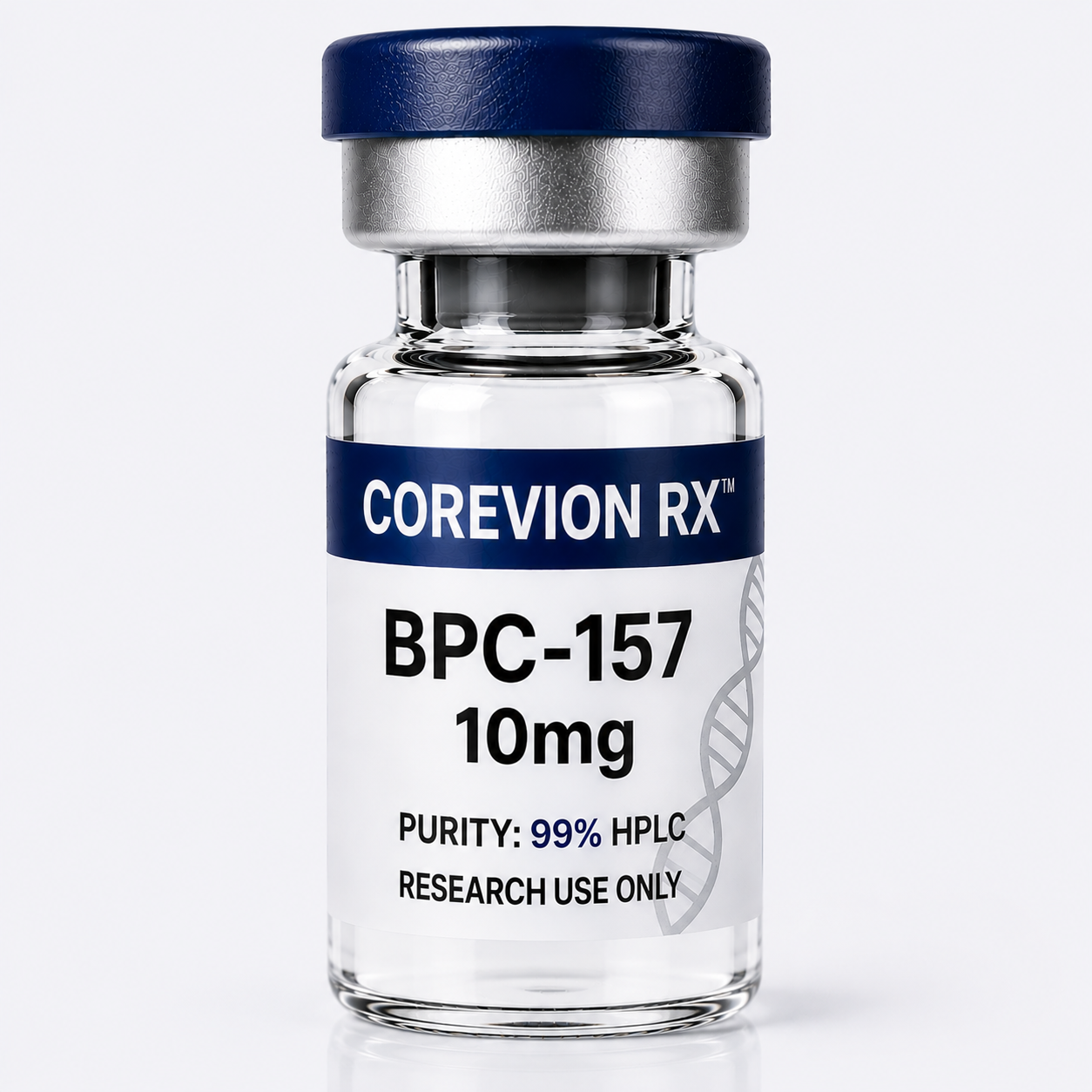
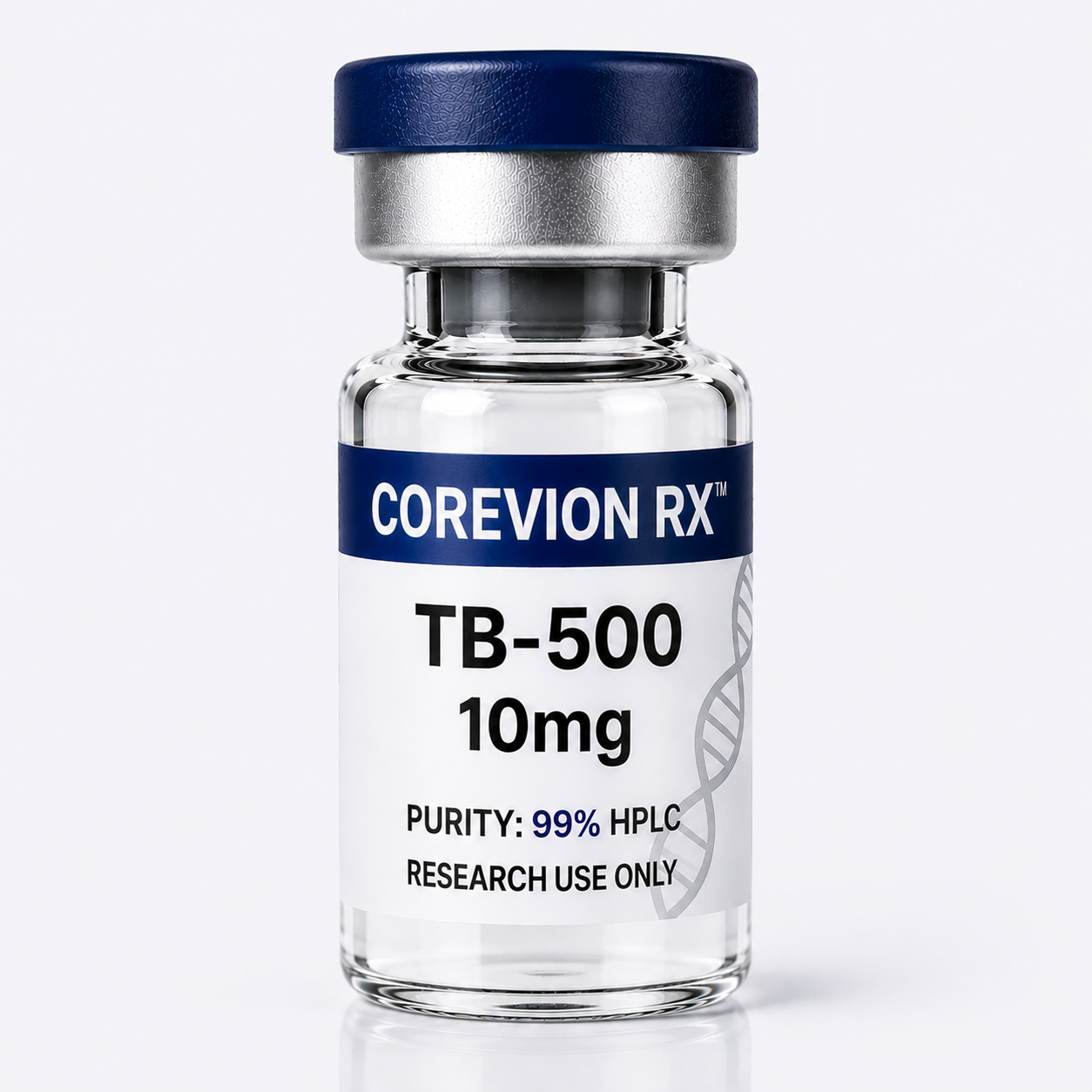
BPC-157 10mg research peptide vial

BPC-157 · 5mg vial

TB-500 10mg research peptide vial

TB-500 · 10mg vial

Quick Comparison

FeatureBPC-157TB-500
Full NameBody Protection Compound-157Thymosin Beta-4 fragment
Amino Acids1517 (fragment of 43-AA protein)
OriginGastric juice protective proteinThymus gland protein (Thymosin β4)
Primary MechanismGrowth factor upregulation, angiogenesis, nitric oxide modulationActin sequestration, cell migration, anti-inflammatory signaling
Primary Research AreasTendon-to-bone attachment, GI mucosal repair, ligament healingSoft tissue repair, cardiac tissue, wound healing, flexibility research
GI ResearchExtensive — gastric ulcer, IBD, fistula modelsLimited
Standard Vial Size5mg10mg
Publication Count600+ preclinical studies400+ studies on Thymosin β4 / TB-500

What Is BPC-157?

BPC-157 (Body Protection Compound-157) is a synthetic pentadecapeptide — a 15-amino-acid sequence derived from a protein found in human gastric juice. It has been studied in preclinical models since the early 1990s and has accumulated one of the largest bodies of preclinical literature of any research peptide.

The primary mechanisms studied include upregulation of growth factors (VEGF, EGF), promotion of angiogenesis (new blood vessel formation), modulation of nitric oxide synthesis, and effects on tendon fibroblast proliferation. BPC-157 is stable in acidic environments, which is unusual for peptides and contributes to its extensive study in gastrointestinal models.

Research has examined BPC-157 in models involving: tendon-to-bone attachment repair, ligament healing, gastric ulcer protection, inflammatory bowel disease, fistula repair, and muscle tissue recovery. See the full BPC-157 research overview for compound-specific documentation.

What Is TB-500?

TB-500 is a synthetic analog of Thymosin Beta-4 (Tβ4), a 43-amino-acid protein found in most human and animal cells. The TB-500 fragment specifically contains the actin-binding domain of Thymosin Beta-4 — the sequence most associated with the protein’s biological activity in research models.

The primary mechanisms studied include actin sequestration (regulating the ratio of free actin to bound actin in cells), promotion of cell migration (including endothelial cells, keratinocytes, and stem cells), anti-inflammatory signaling, and upregulation of metalloproteinases involved in tissue remodeling. Unlike BPC-157, TB-500 is highly systemic — it promotes cell migration throughout the organism rather than acting primarily at a localized site.

Research has examined TB-500 in models involving: soft tissue wounds, cardiac tissue repair after ischemic events, corneal wound healing, skin wound models, and hair follicle activity. See the full TB-500 research overview for compound-specific documentation.

Key Mechanistic Differences

The most important distinction is that BPC-157 and TB-500 operate through largely non-overlapping pathways, which is why they are studied in combination in many protocols.

BPC-157 primarily works through growth factor signaling and angiogenesis — promoting new blood vessel formation and upregulating growth factors required for tissue regeneration at the site of injury.

TB-500 primarily works through actin dynamics and cell migration. By sequestering G-actin, it promotes cell motility — the migration of repair cells to sites of injury. This systemic mobilization mechanism is distinct from BPC-157’s local growth factor effects.

In combination, the compounds address both the mobilization of repair cells (TB-500) and the local growth factor environment those cells need to function (BPC-157) — which explains why dual-peptide protocols appear frequently in preclinical research literature.

When Researchers Choose Each Compound

BPC-157 research focus

  • Tendon and ligament repair models
  • GI mucosal protection research
  • Bone-to-tendon attachment studies
  • Inflammatory bowel disease models
  • Localized tissue repair protocols

TB-500 research focus

  • Soft tissue wound healing models
  • Cardiac tissue repair research
  • Systemic cell migration studies
  • Corneal and skin wound models
  • Protocols requiring systemic distribution

Can BPC-157 and TB-500 Be Used Together?

Yes — dual-peptide protocols combining BPC-157 and TB-500 appear frequently in preclinical research literature. The rationale is mechanistic complementarity: TB-500 promotes the systemic mobilization and migration of repair cells, while BPC-157 creates the local growth factor environment those cells require to complete the repair process.

CoreVionRX offers both compounds individually and as components of the GLOW 70mg blend (GHK-Cu + BPC-157 + TB-500) and KLOW 80mg blend (GHK-Cu + BPC-157 + TB-500 + KPV) for researchers studying multi-compound protocols.

Frequently Asked Questions

Is BPC-157 or TB-500 more studied?

BPC-157 has a larger volume of preclinical literature — over 600 published studies — compared to TB-500, which has approximately 400 studies covering Thymosin Beta-4 and its fragments. BPC-157 has been in active preclinical research since the early 1990s, giving it a longer publication history.

What is the difference between TB-500 and Thymosin Beta-4?

Thymosin Beta-4 is the naturally occurring 43-amino-acid protein. TB-500 is a synthetic peptide consisting of the actin-binding domain fragment of Thymosin Beta-4 — specifically the sequence most associated with biological activity in research models. TB-500 is used in research as a more accessible analog that retains the key functional characteristics of the full protein.

Why do researchers combine BPC-157 and TB-500?

BPC-157 and TB-500 are combined in research because they operate through complementary rather than overlapping mechanisms. TB-500 promotes the systemic migration of repair cells to injury sites through actin sequestration. BPC-157 promotes the local growth factor environment — particularly VEGF-driven angiogenesis — that migrated repair cells require to function effectively.

Where can I buy BPC-157 and TB-500 for research?

CoreVionRX carries both BPC-157 (5mg) and TB-500 (10mg) individually with independent HPLC purity verification (≥98%) and mass spectrometry identity confirmation. A lot-specific Certificate of Analysis is included with every order. Both compounds are also available as components of the GLOW and KLOW multi-compound blends. All products are for laboratory research use only.


Related Research Guides: How to Read a Peptide COA →  ·  How to Reconstitute Research Peptides →  ·  Research Peptide FAQs →
Bacteriostatic Water for Peptide Reconstitution: A Complete Lab Guide

Every lyophilized research peptide requires reconstitution before use, and the choice of reconstitution solvent affects stability, compatibility, and multi-dose usability in ways that directly impact data quality. Bacteriostatic water (BAC water) is the standard reconstitution solvent for the majority of research peptides — not because it is the only option, but because its specific formulation addresses the most common practical challenges in a peptide research workflow. Understanding what makes it the right choice — and the edge cases where it isn’t — is part of running a consistent lab.

What Bacteriostatic Water Is

Bacteriostatic water for injection is sterile water preserved with 0.9% benzyl alcohol (w/v). The benzyl alcohol concentration is precisely chosen: sufficient to inhibit bacterial growth across multiple vial entries while remaining below concentrations that would meaningfully affect most peptide compounds or cellular assays at standard dilutions.

The “bacteriostatic” qualifier means the benzyl alcohol inhibits bacterial replication rather than killing bacteria outright — a distinction relevant for storage protocols. A contaminated vial of bacteriostatic water will not show visible bacterial growth the way an unpreserved vial might, but it is not sterile in the sense of being entirely free of microbial life if contaminated. Proper aseptic technique at each vial entry remains essential; the preservative is not a substitute for technique.

Bacteriostatic Water vs. Sterile Water vs. Saline

These three solvents are not interchangeable. The differences matter for research protocol design.

Sterile water has no preservative. Once the septum is punctured, the remaining volume is exposed to potential contamination with each subsequent entry. USP guidelines classify sterile water vials as single-use for this reason. For protocols requiring a single preparation from each vial, sterile water is acceptable. For multi-dose protocols — where the same vial will be accessed multiple times over days or weeks — the contamination risk with sterile water makes it a poor choice.

Saline (0.9% NaCl) introduces sodium ions at a concentration that can affect the solubility of certain peptides and alter the ionic environment of cell culture assays. It is the preferred diluent for some injectable formulations, but for most peptide research protocols, the ionic content adds variables that bacteriostatic water avoids. Saline also lacks preservative, making it similarly single-use in practice.

Bacteriostatic water combines sterility, preservative stability across multiple entries, and a relatively neutral ionic environment. It is the most broadly compatible reconstitution solvent for lyophilized research peptides and is specified in the majority of published peptide research protocols.

pH and Peptide Compatibility

Bacteriostatic water maintains a pH of approximately 5.0-7.0 — slightly acidic to neutral. Most research peptides dissolve readily and maintain stability in this range. Some peptides with extreme isoelectric points (very high or very low pI) may require pH adjustment or a different buffer system for optimal solubility, but these cases are exceptions rather than the rule.

Specific compatibility notes for commonly studied compounds: BPC-157 dissolves readily and maintains stability in bacteriostatic water with no additives required. TB-500, GHK-Cu, Ipamorelin, CJC-1295 with DAC, Semax, and Epithalon all behave similarly. Melanotan II and PT-141 are slightly more sensitive to light than other compounds and should have reconstituted solutions protected from prolonged light exposure. NAD+ is water-soluble but not a peptide — it dissolves readily in bacteriostatic water but is better stored as dry powder given its shorter solution stability.

Acetic acid is sometimes specified for peptides with very low solubility in neutral aqueous solution. If your COA or published protocol specifies 10% acetic acid rather than plain bacteriostatic water, this should be followed. Mixing acetic acid into bacteriostatic water at the appropriate concentration is more commonly done by experienced researchers than purchasing pre-acidified BAC water, which is not a standard commercial product.

Calculating Reconstitution Volumes

The most common error in peptide reconstitution is incorrect volume calculation. The math is straightforward, but the consequences of a concentration error compound across every downstream calculation in the protocol.

The formula: volume of BAC water (mL) = mass of peptide (mg) ÷ target concentration (mg/mL)

Examples: A 5mg BPC-157 vial at target concentration 2mg/mL requires 2.5mL of bacteriostatic water. A 10mg TB-500 vial at target concentration 1mg/mL requires 10mL. A 100mg GHK-Cu vial at target concentration 10mg/mL requires 10mL.

The choice of target concentration depends on the dosing volume your protocol requires. Protocols using small injection volumes (50-100μL) work better with higher concentrations; those using larger volumes can use lower concentrations. The reconstitution calculator at corevionrx.com/calculator handles this automatically — enter the vial size and target concentration, and it returns the exact BAC water volume to add.

Reconstitution Technique Step by Step

Technique at reconstitution affects peptide integrity. Mechanical disruption during reconstitution — particularly foaming from vigorous mixing — can cause aggregation in some peptides that is not fully reversible.

  1. Allow the lyophilized vial to reach room temperature before opening or reconstituting. Cold vials condensate when opened, introducing moisture that can degrade the powder before reconstitution is complete.
  2. Wipe the rubber septum of both the BAC water vial and the peptide vial with a fresh alcohol swab. Allow to dry completely before proceeding.
  3. Draw the calculated volume of BAC water into a clean syringe. For volumes above 2mL, use a larger syringe to maintain control.
  4. Insert the needle into the peptide vial and direct the stream of water slowly down the inner wall of the vial — not directly onto the lyophilized powder. Directing water onto the powder causes turbulence that can mechanically stress the peptide.
  5. Once all water is added, remove the needle and gently swirl the vial in a circular motion. Do not shake. The solution should become clear. Cloudiness may indicate incomplete dissolution (swirl more) or aggregation (check reconstitution conditions and peptide quality).
  6. If the solution does not clear after several minutes of swirling, check that the calculated volume was correct and that the peptide and water are fully mixed. Some peptides (particularly those at high concentrations or with lower intrinsic solubility) require 5-10 minutes of occasional swirling to fully dissolve.

Multi-Dose Storage After Reconstitution

Reconstituted peptides stored in bacteriostatic water at 2–8°C maintain usability for approximately 28 days in most cases. The benzyl alcohol preservative inhibits microbial growth across multiple needle entries during this period. However, the peptide itself may degrade over this timeframe regardless of sterility — temperature, light exposure, and the number of freeze-thaw cycles (if applicable) all affect the rate of degradation.

Best practice for multi-dose use: minimize the number of vial entries. Use a dedicated syringe for drawing doses rather than reusing the same syringe across multiple time points. Do not freeze reconstituted solutions unless the peptide’s stability data specifically supports freeze-thaw recovery for that compound — most peptides perform better stored at refrigerator temperature than cycled between frozen and thawed states.

Storage of Unopened BAC Water Vials

Bacteriostatic water vials should be stored at room temperature (15–30°C) or refrigerated (2–8°C) before first use. Freezing is unnecessary and may stress the rubber stopper. Once opened — defined as first needle puncture through the septum — the vial should be used within 28 days, consistent with USP multi-dose vial guidelines. Label the vial with the opening date. Inspect visually before each use — discard if cloudiness, particulate matter, or color change is observed.

Key Reference Standards

For related peptide preparation guides, see the How to Reconstitute Research Peptides guide and Peptide Storage Guide.


Source Bacteriostatic Water for Research

Bacteriostatic Water Research Overview →
Order Bacteriostatic Water from CoreVionRX →


For more on purity verification, COA reading, reconstitution, and sourcing standards: Research Peptide FAQs  ·  CoreVionRX testing standards

Related Research Guides

MOTS-c Research Guide: Mitochondrial-Derived Peptide, AMPK & Metabolic Research

For the MOTS-c research overview and sourcing information, see the MOTS-c research peptide page. MOTS-c (Mitochondrial Open Reading Frame of the 12S rRNA-c) is a 16-amino-acid peptide with an origin that makes it unlike any other compound in the research peptide catalog: it is encoded within the mitochondrial genome, not the nuclear genome. Every other peptide in standard research use is nuclear-encoded. MOTS-c belongs to a newly characterized class called mitochondrial-derived peptides (MDPs), and its discovery in 2015 opened a research domain that had previously not existed — retrograde mitochondrial-to-nuclear signaling via small peptides.

Discovery and Mitochondrial Encoding

The discovery of MOTS-c was published in 2015 by Chang Lee and colleagues at the USC Leonard Davis School of Gerontology. They identified a small open reading frame within the mitochondrial 12S ribosomal RNA gene — a region previously considered non-coding — that produced a functional peptide. This was significant for several reasons.

Mitochondria carry their own separate genome, inherited maternally and encoding only 37 genes in humans. The idea that this genome produces signaling peptides that travel to the nucleus and affect nuclear gene expression was not established before this discovery. MOTS-c became the first such mitochondrial-encoded signaling peptide to be characterized, and its identification prompted reexamination of other mitochondrial genomic regions for similar ORFs.

The sequence MRWQEMGYIFYPRKLR — 16 amino acids — is conserved across mammals, suggesting functional importance maintained through evolutionary selection. This conservation pattern, combined with the compound’s metabolic effects, positioned it immediately as a research target for longevity and metabolic disease investigators.

AMPK Activation and the AICAR Connection

MOTS-c’s primary characterized mechanism involves activation of AMPK (AMP-activated protein kinase) — a master metabolic regulator that responds to cellular energy status. When cellular ATP falls and AMP rises, AMPK activates, promoting glucose uptake, fatty acid oxidation, and mitochondrial biogenesis while suppressing energy-consuming anabolic processes.

The mechanism through which MOTS-c activates AMPK is indirect and goes through the folate cycle. MOTS-c inhibits the folate cycle enzyme AICAR transformylase, which causes accumulation of AICAR (5-aminoimidazole-4-carboxamide ribonucleotide). AICAR is itself a direct AMPK activator. This means MOTS-c → folate cycle disruption → AICAR accumulation → AMPK activation — a multi-step pathway that links mitochondrial signaling to nuclear metabolic programming.

Lee et al. (2015) documented this AICAR-mediated mechanism in cell culture and rodent models, showing that MOTS-c treatment produced effects consistent with AMPK activation, and that these effects were blocked by AMPK inhibitors. This mechanistic work established MOTS-c as an indirect AMPK activator rather than a direct receptor agonist.

Insulin Sensitivity and Metabolic Research

A significant body of MOTS-c research has focused on metabolic outcomes associated with AMPK activation, particularly insulin sensitivity and glucose homeostasis. In rodent models of diet-induced obesity and type 2 diabetes, MOTS-c administration has been associated with improved insulin sensitivity, reduced fat mass, and better glucose tolerance compared to controls.

Kim et al. (2018) examined MOTS-c in aging mouse models and found that the peptide reversed age-related insulin resistance — an effect that required AMPK activation in skeletal muscle. The authors proposed that declining endogenous MOTS-c levels with age may contribute to the metabolic dysfunction associated with aging, and that exogenous MOTS-c could serve as a research tool for studying this relationship.

The metabolic research is complicated by the fact that MOTS-c appears to act differently depending on the site of administration and the metabolic state of the model. Studies in obese vs lean animals, and in different tissue types, have produced results that suggest tissue-specific AMPK activation patterns rather than a uniform systemic effect.

Exercise Physiology Research

One of the more interesting observations in MOTS-c research is that endogenous MOTS-c levels increase with physical exercise in both rodents and humans. Reynolds et al. (2021) measured plasma MOTS-c before and after exercise in human subjects and found significant elevation following acute exercise — a pattern consistent with mitochondria responding to energetic stress by signaling through MOTS-c to nuclear metabolic programs.

This exercise-mimetic framing has made MOTS-c interesting for research examining the molecular mechanisms of exercise adaptation — how skeletal muscle responds to training, how mitochondrial biogenesis is regulated, and whether some of exercise’s metabolic benefits can be studied using MOTS-c as a pharmacological probe. This research is entirely preclinical but represents an active and growing area of investigation.

Purity Standards for Mitochondrial Peptide Research

MOTS-c research requires ≥98% purity by HPLC, with mass spectrometry confirmation of the 16-residue sequence. The compound is less commonly synthesized than major research peptides like BPC-157 or TB-500, which means there are fewer manufacturers with established quality records and higher baseline risk of receiving incorrectly synthesized or characterized material.

The expected molecular weight for MOTS-c is approximately 2173.5 g/mol (free acid form). Mass spectrometry should confirm this value. If the confirmation shows a different mass, the compound identity is in question regardless of HPLC purity — it may be correctly synthesized but labeled incorrectly, or it may be a synthesis byproduct with similar chromatographic behavior but different sequence.

Because the folate cycle mechanism is central to MOTS-c’s characterized activity, impurities that independently affect folate pathway enzymes would directly confound experimental results. This is not a commonly discussed concern for more mechanistically straightforward peptides, but MOTS-c’s multi-step activation mechanism makes the impurity profile more important, not less.

Storage and Handling

n

Before reconstituting, use the Peptide calculator to plan your preparation volume and concentration.

n

Before reconstituting, use the Peptide calculator to plan your preparation volume and concentration.

Store lyophilized MOTS-c at −20°C, sealed against moisture and light. As a 16-amino-acid peptide without unusual modifications, MOTS-c follows standard lyophilized peptide stability guidelines — expect 24 months or longer under proper conditions. The 40mg vial format is standard for MOTS-c research, as protocols typically require larger quantities than smaller, more potent compounds.

Reconstitute with bacteriostatic water or sterile water per your protocol requirements. MOTS-c dissolves readily. Aliquot before reconstituting if multiple preparations are needed — repeated freeze-thaw cycles degrade the peptide regardless of sequence stability. For metabolic and exercise physiology protocols that require multiple dosing time points, preparing individual aliquots from lyophilized stock before any reconstitution preserves compound integrity across the full protocol duration.

Key Research Citations


Source MOTS-c for Research

MOTS-c Research Overview →
Order MOTS-c from CoreVionRX →


For more on purity verification, COA reading, reconstitution, and sourcing standards: Research Peptide FAQs  ·  CoreVionRX testing standards

Related Research Guides

CJC-1295 with DAC: GHRH Analog Research, Drug Affinity Complex & Purity Guide

For CJC-1295 with DAC sourcing and research context, review the CJC-1295 DAC research peptide page. CJC-1295 with DAC is a synthetic growth hormone-releasing hormone (GHRH) analog distinguished by two features: four amino acid substitutions that improve metabolic stability, and a Drug Affinity Complex (DAC) modification that enables albumin binding and dramatically extends plasma half-life. The result is a GHRH analog that behaves nothing like native GHRH(1-29), which has a half-life measured in minutes. CJC-1295 with DAC maintains bioactivity for several days after a single dose in rodent models — a pharmacokinetic profile that creates entirely different research possibilities and requires entirely different handling and documentation practices.

GHRH Biology and the Case for Analogs

Growth hormone-releasing hormone is a 44-amino-acid peptide secreted by the hypothalamus that stimulates GH release from pituitary somatotrophs. The biologically active portion is contained within the first 29 residues — GHRH(1-29) — which is why early synthetic GHRH analogs focused on that fragment. The problem with native GHRH(1-29) as a research tool is its rapid degradation: plasma dipeptidyl peptidase IV (DPP-IV) cleaves the His-Ala bond at positions 2-3 within minutes of administration, rendering it unsuitable for experiments requiring sustained GH stimulation.

CJC-1295 was developed to solve this problem. The four amino acid substitutions — Ala2 to Aib (DPP-IV protection), Gln8 to Ala (stability), Ala15 to Aib (stability), Leu27 to Arg (receptor binding optimization) — collectively extend the half-life from minutes to approximately 30 minutes for the base compound without DAC. The DAC modification extends it further still, to days.

The Drug Affinity Complex: How It Works

The DAC modification is a maleimide-lysine group attached to the epsilon-amino group of a lysine residue within the peptide sequence. Maleimide groups react specifically with the free thiol group of Cys-34 in human serum albumin — the most abundant plasma protein. This covalent albumin binding is what produces the extended half-life.

Once CJC-1295 with DAC binds albumin, the albumin-peptide complex circulates with the same half-life as albumin itself — approximately 19 days in humans. The GHRH receptor binding site on the peptide remains accessible despite the albumin attachment, so the compound can still stimulate pituitary GHS receptor signaling while circulating bound to albumin. The net effect is a compound that produces sustained, low-level GHRH receptor stimulation over multiple days from a single administration.

Jetté et al. (2005) documented this mechanism in detail, showing that the albumin-binding reaction was specific to Cys-34 and that the resulting complex retained GHRH receptor activity. This paper is the primary reference for understanding why CJC-1295 with DAC behaves so differently from both native GHRH and the without-DAC analog.

CJC-1295 With DAC vs Without DAC: Research Design Implications

The distinction between CJC-1295 with DAC and without DAC (also called Modified GRF 1-29 or CJC-1295 without DAC) is not a minor formulation difference — it represents fundamentally different pharmacokinetic paradigms with distinct experimental applications.

Without DAC, the compound has a half-life of 30-45 minutes. It produces a discrete GH pulse within an hour of administration and then clears. This makes it useful for studying acute pituitary responses, examining the relationship between GHRH receptor stimulation and GH pulse amplitude, or for experiments where controlled dosing intervals are required.

With DAC, GH elevation is sustained over multiple days. This is useful for studying the downstream consequences of prolonged GH elevation — IGF-1 production kinetics, changes in body composition over longer time periods, and experiments where consistent GH background is more important than pulsatility. It is also logistically simpler for multi-day animal studies, requiring less frequent dosing.

The choice between the two depends entirely on the research question. Researchers studying pulsatility, acute GH responses, or dose-response curves typically use the without-DAC version. Researchers studying downstream metabolic effects over longer periods typically prefer the with-DAC version. Receiving the wrong one is a meaningful experimental error, not a minor inconvenience.

COA Verification: The DAC Moiety Matters

Standard peptide COA verification checks HPLC purity and molecular weight. For CJC-1295 with DAC, this standard is necessary but not sufficient. The DAC moiety must be verified as correctly attached and chemically intact. A COA that confirms the peptide sequence without addressing DAC integrity is leaving the most pharmacologically critical modification unconfirmed.

The correct molecular weight for CJC-1295 with DAC is approximately 3647.28 g/mol — significantly higher than the without-DAC form (~3367.15 g/mol). If mass spectrometry confirms a value in the 3367 range rather than 3647, you have received the without-DAC version regardless of what the label says. This is not a theoretical risk; it has been documented in the research literature examining compound identity in the commercial peptide market.

The maleimide group in the DAC modification can also hydrolyze slowly under aqueous conditions, converting to a maleamic acid form that cannot bind albumin. For this reason, reconstituted CJC-1295 with DAC should be used promptly and not stored as a solution for extended periods. The hydrolysis is slow and may not be detectable by standard HPLC, but it progressively reduces the proportion of albumin-binding-competent compound in the preparation.

Storage and Handling

n

Before reconstituting, use the Peptide calculator to standardize your preparation math.

Store lyophilized CJC-1295 with DAC at −20°C, sealed, protected from light and moisture. The maleimide group is stable in lyophilized form — moisture is the primary concern, as even atmospheric humidity can initiate the slow hydrolysis described above. Under proper dry conditions, lyophilized CJC-1295 with DAC maintains stability for 24 months.

Reconstitute with bacteriostatic water. The compound dissolves at typical research concentrations without difficulty despite its larger size (~3.6 kDa). Inject water down the vial wall, swirl gently. Use reconstituted solution promptly. If your protocol requires preparation in advance, prepare the smallest volume needed for each experimental run rather than preparing a bulk solution with extended storage time.

Key Research Citations


Source CJC-1295 with DAC for Research

CJC-1295 with DAC Research Overview →
Order CJC-1295 with DAC from CoreVionRX →


For more on purity verification, COA reading, reconstitution, and sourcing standards: Research Peptide FAQs  ·  CoreVionRX testing standards

Related Research Guides

Ipamorelin Research Guide: GHS-R1a Pharmacology, Selectivity & Purity

If you’re researching Ipamorelin, start with the Ipamorelin research overview for sourcing and quality context. Ipamorelin is a synthetic pentapeptide growth hormone secretagogue (GHS) and selective agonist of the ghrelin receptor (GHS-R1a). Its sequence — Aib-His-D-2-Nal-D-Phe-Lys-NH₂ — includes several non-natural amino acid substitutions that confer receptor selectivity and metabolic stability. Identified in 1998 by researchers at Novo Nordisk, Ipamorelin was notable from the outset for something no earlier GHRP had demonstrated: clean GH release without meaningful elevation of cortisol, prolactin, or ACTH. That selectivity is what has kept it relevant as a research tool for nearly three decades.

The GHRP Selectivity Problem Ipamorelin Solved

To understand why Ipamorelin matters, it helps to understand the problem it was designed to solve. First-generation growth hormone releasing peptides — GHRP-2 and GHRP-6 in particular — did stimulate GH release through GHS-R1a, but they also activated receptors responsible for cortisol and prolactin secretion. This made studying GH-specific effects difficult, because every experimental outcome was potentially confounded by concurrent hormonal changes that had nothing to do with GH.

Ipamorelin was specifically designed to avoid these off-target effects. The non-natural amino acids in its sequence — particularly the D-2-Nal at position 3 and the C-terminal amide — were chosen to maximize GHS-R1a binding affinity while minimizing binding to the receptors responsible for cortisol and prolactin signaling. The result is a compound that can be used to study GH axis pharmacology without the hormonal noise that limited earlier GHRPs.

GHS-R1a Receptor Pharmacology

GHS-R1a is the endogenous receptor for ghrelin — the gut-derived peptide that signals hunger and stimulates GH secretion. The receptor is expressed predominantly in the pituitary somatotrophs and the hypothalamus, with additional expression in several other CNS regions. When Ipamorelin binds GHS-R1a, it triggers intracellular calcium release and cAMP elevation, ultimately stimulating GH granule release from the pituitary.

What makes Ipamorelin pharmacologically interesting is that it achieves this through GHS-R1a alone. Raun et al. (1998) — the original characterization paper — demonstrated this selectivity profile directly, showing that Ipamorelin produced GH release comparable to GHRP-6 but without the ACTH or cortisol elevation seen with the earlier compound. This made it immediately useful for experiments that needed to isolate GH effects from stress hormone confounds.

Pulsatile vs Sustained GH Release Research

One of the more productive research applications for Ipamorelin is studying the difference between pulsatile and sustained GH secretion paradigms. Under normal physiology, GH is released in discrete pulses — typically 6 to 12 per day — with the largest pulses occurring during slow-wave sleep. The metabolic consequences of GH pulsatility versus continuous GH elevation are significantly different, and understanding that difference requires compounds with different pharmacokinetic profiles.

Ipamorelin, with its relatively short half-life (~2 hours), produces acute GH pulses that more closely mimic natural physiology than longer-acting compounds like CJC-1295 with DAC. Research examining how pulse frequency and amplitude affect downstream IGF-1 production, lean mass, and fat metabolism frequently uses Ipamorelin as the acute-pulse agent, sometimes paired with a GHRH analog to examine the synergistic effects of dual-pathway stimulation.

Combined Research with CJC-1295

Ipamorelin is frequently studied alongside CJC-1295 with DAC in dual-peptide protocols. For blend-specific guidance, see the CJC-1295 + Ipamorelin blend research guide. The rationale is mechanistic: CJC-1295 acts on the GHRH receptor while Ipamorelin acts on GHS-R1a. These are two distinct, complementary pathways for GH secretion — the same two pathways that naturally interact to produce physiological GH pulses. Stimulating both simultaneously produces greater GH release than either compound alone, and the pattern of release more closely resembles natural pulsatile secretion than either agent achieves independently.

Ionescu and Frohman (2006) documented this synergistic relationship, showing that combined GHRH analog and GHS-R1a stimulation produced GH release greater than the sum of the individual compounds. For research examining the downstream metabolic consequences of GH axis stimulation, this dual-pathway model is considered more physiologically relevant than single-compound approaches.

Non-Natural Amino Acids and Purity Assessment

The non-natural amino acids in Ipamorelin’s sequence — Aib (alpha-aminoisobutyric acid), D-2-Nal (D-2-naphthylalanine), and D-Phe — are critical to its pharmacological profile. They are also what makes purity assessment more complex than for standard L-amino acid peptides.

During synthesis, incomplete incorporation of non-natural residues, or racemization at D-amino acid positions, can produce impurities with different receptor binding characteristics. An impurity with L-Phe instead of D-Phe at position 4, for example, would have significantly altered GHS-R1a binding affinity. Standard HPLC detects these as separate peaks, which is why the chromatogram on your COA matters as much as the purity percentage. The amidated C-terminus (Lys-NH₂) must also be confirmed — de-amidated Ipamorelin has different stability characteristics and receptor interactions.

Mass spectrometry confirmation is non-optional for Ipamorelin. The expected molecular weight is approximately 711.86 g/mol (free base). Confirmation that this value matches your COA, combined with HPLC purity ≥98%, gives you reasonable confidence that the non-natural residues are correctly incorporated and the compound is intact.

Storage and Handling

n

For reconstitution calculations and concentration planning, use the Peptide calculator to standardize prep math across your team.

n

For reconstitution calculations and concentration planning, use the Peptide calculator to standardize prep math across your team.

Store lyophilized Ipamorelin at −20°C, protected from light and moisture. The D-amino acids in the sequence provide metabolic stability — peptidases that rapidly degrade L-amino acid sequences are significantly less effective against D-amino acid-containing peptides. This makes lyophilized Ipamorelin robust in storage, with stability of 24 months or more under correct conditions.

Reconstitute with bacteriostatic water. Ipamorelin dissolves readily at typical research concentrations. Inject water slowly down the vial wall, swirl gently, and avoid shaking. The C-terminal amide group is stable under standard reconstitution conditions. Store reconstituted solution at 2–8°C. Aliquot before reconstituting if multi-use preparations are needed across multiple time points.

Key Research Citations


Source Ipamorelin for Research

Ipamorelin Research Overview →
Order Ipamorelin from CoreVionRX →


For more on purity verification, COA reading, reconstitution, and sourcing standards: Research Peptide FAQs  ·  CoreVionRX testing standards

Related Research Guides

Semax Research Guide: BDNF, Neuroprotection & Sourcing Quality

For the Semax research overview and sourcing context, see the Semax research peptide page. Semax is a synthetic heptapeptide analog of ACTH(4-10) — a fragment of adrenocorticotropic hormone — and one of the more extensively studied nootropic peptides in preclinical research. Its sequence (Met-Glu-His-Phe-Pro-Gly-Pro) includes the core melanocyte-stimulating hormone region, modified to remove the hormonal activity while preserving the neurological signaling properties. What remains is a compound that reliably upregulates BDNF across multiple model systems, making it one of the more targeted tools available for neuroprotection research.

Origins and Development

Semax was originally developed in the Soviet Union in the 1980s at the Institute of Molecular Genetics in Moscow. The research team was investigating which portion of the ACTH molecule was responsible for its cognitive-enhancing effects — separate from its better-known role in cortisol stimulation. They identified the ACTH(4-10) fragment as the biologically active sequence for central nervous system effects, then created a synthetic heptapeptide analog that was more metabolically stable and easier to produce consistently.

The compound has been registered as a pharmaceutical in Russia and Ukraine under the trade name Semax, primarily for use in stroke recovery and cognitive rehabilitation protocols. This regulatory history is unusual in the peptide research world — most research compounds have no approved drug equivalent. It also means there is a larger clinical literature base than most preclinical-only peptides, though the majority of mechanistic research was conducted in rodent models.

Primary Mechanism: BDNF Upregulation

Brain-derived neurotrophic factor (BDNF) is a protein that supports the survival of existing neurons and promotes the growth and differentiation of new neurons and synapses. Low BDNF levels are associated with neurodegenerative conditions, depression, and cognitive decline. The primary research interest in Semax centers on its consistent ability to increase BDNF expression in rodent brain tissue — specifically in the hippocampus and frontal cortex.

The mechanism involves Semax binding to melanocortin receptors in the CNS, triggering a cascade that activates the TrkB receptor pathway — the same signaling route through which BDNF itself operates. Research by Dolotov et al. (2006) documented this BDNF elevation in rats following Semax administration and tracked downstream effects on TrkB signaling. The result is a compound that doesn’t directly deliver BDNF (which cannot cross the blood-brain barrier when administered peripherally) but instead stimulates endogenous BDNF production from within the CNS.

Neuroprotection Research

A significant body of preclinical research has examined Semax in ischemia and hypoxia models. The compound has demonstrated protective effects on neuronal survival in rodent stroke models, with several studies documenting reduced infarct size and improved behavioral outcomes when Semax is administered before or shortly after ischemic events. The proposed mechanism involves both the BDNF upregulation discussed above and a separate anti-inflammatory pathway that reduces excitotoxic damage.

Miasoedov et al. (1999) published one of the foundational papers on Semax’s neuroprotective properties, demonstrating effects on learning and memory consolidation in rodent behavioral models. Subsequent work confirmed these results and explored dose-response relationships, with effects observed across a range of concentrations.

HPA Axis Considerations in Research Design

Because Semax is derived from ACTH, researchers sometimes ask whether it affects cortisol production. The evidence suggests it does not, at least not significantly at standard research concentrations. The ACTH(4-7) core sequence responsible for adrenocortical stimulation is separate from the ACTH(4-10) sequence in Semax, and the modifications that create Semax appear to eliminate adrenocortical activity while preserving CNS effects. This makes Semax more useful as a clean research tool than full ACTH analogs, where separating neurological effects from cortisol-mediated effects complicates study design.

For research protocols that require HPA axis isolation — measuring cognitive or neuroprotective outcomes without cortisol confounds — this specificity is a practical advantage.

Purity Standards for Neuroprotection Research

Semax research requires ≥98% purity by HPLC, but the specific impurities that matter depend on the research application. For BDNF and neuroprotection studies, the concern is impurities that may independently activate or suppress neurotrophin pathways. Any degradation product that includes the Met-Glu-His core could potentially interact with melanocortin receptors at unexpected concentrations.

The methionine residue at position 1 is particularly susceptible to oxidation if the compound is exposed to moisture during storage. Oxidized methionine produces Met(O)-Glu-His-Phe-Pro-Gly-Pro — a modified sequence with potentially different receptor binding characteristics. A lot-specific COA with mass spectrometry confirmation should verify the expected molecular weight and confirm the methionine is not oxidized. This is not a theoretical concern — it is one of the more common reasons for inconsistent results in Semax experiments.

Storage and Handling Protocol

Store lyophilized Semax at −20°C in the sealed vial, protected from light and moisture. As a heptapeptide, Semax is relatively small and does not require the same stringent conditions as larger, more fragile compounds. Under proper conditions, lyophilized Semax maintains stability for 24 months or longer.

Reconstitute with bacteriostatic water. The peptide dissolves readily — inject water slowly down the inner wall of the vial rather than directly onto the powder. Swirl gently; do not shake. Reconstituted Semax should be stored at 2–8°C and used within the protocol timeframe. If multi-use is required, aliquot before reconstituting to avoid repeated freeze-thaw cycles. Each freeze-thaw cycle introduces minor degradation, and for neuroprotection studies where dose consistency matters, this accumulation can affect data quality.

Evaluating Semax Quality at the Source

Semax is not among the most commonly counterfeited peptides, but lot-specific documentation is still the baseline standard. Any supplier providing a generic COA — one without a specific lot number tied to your order — is not meeting the documentation standard that reproducible research requires. The COA should include the HPLC chromatogram showing the peak profile, the purity percentage, and the mass spectrometry confirmation of molecular weight.

The correct molecular weight for Semax (free acid form) is approximately 887.0 g/mol. If mass spec data shows a significantly different value, either the compound identity is wrong or there is a modification (such as the Met oxidation discussed above) that should be investigated before proceeding with experiments.

Key Research Citations


Source Semax for Research

Semax Research Overview →
Order Semax from CoreVionRX →


For more on purity verification, COA reading, reconstitution, and sourcing standards: Research Peptide FAQs  ·  CoreVionRX testing standards

Related Research Guides

Thymosin Alpha-1 Research: Storage & Quality Guide

When a laboratory introduces a peptide into its workflow, the compelling question is never what the label says — it is whether the compound performs consistently across different preparers, across weeks of experiments, and under critical scrutiny. That is precisely why Thymosin Alpha-1 peptide remains a staple in research conversations. It is widely referenced in immune signaling studies, yet its value depends entirely on clean inputs and meticulous documentation.

If you want reproducible results with Thymosin Alpha-1 peptide, the approach is disciplined and methodical: verify every lot, maintain COA-to-vial linkage, store correctly, standardize your preparation calculations, and log everything so any team member can replicate your work without guesswork.

Begin by reviewing the Thymosin Alpha-1 research overview and product specifications for Thymosin Alpha-1, then build your laboratory routine around traceability and consistency.

What Is Thymosin Alpha-1 in Research?

Thymosin Alpha-1 (also referred to as Thymosin α1) is a synthetic peptide corresponding to a sequence originally isolated from thymosin fraction 5. In research contexts, it appears in studies examining immune signaling, cellular response pathways, and T-cell modulation. The critical term here is “defined” — a defined peptide is only useful when you can trust that one vial matches another and that your preparation routine does not silently shift concentrations between runs.

This is why Thymosin Alpha-1 peptide rewards workflow maturity over trend-following. Labs treating peptides as plug-and-play inputs often find themselves troubleshooting inexplicable randomness. Labs treating them as controlled research materials build cleaner datasets faster and with less frustration.

If your team manages multiple compounds, standardize procurement through the Peptides catalog to maintain consistent documentation across products.

Why Quality Checks Are Essential

Peptides can appear identical on paper yet behave differently in practice. This discrepancy typically traces to one of three sources:

With Thymosin Alpha-1 peptide, you cannot afford experimental outcomes that depend on whether a vial sat on a warm bench or whether two researchers used different reconstitution volumes unknowingly. Most “mystery drift” is not biology — it is workflow failure.

Making COA review a standard intake step takes minutes and makes subsequent troubleshooting possible.

How to Evaluate a Thymosin Alpha-1 COA

A COA should answer one practical question: does the lot you received match its claimed identity, and can you document that definitively?

When ordering Thymosin Alpha-1 peptide, focus your COA review on traceability and reproducibility support — not filler content.

The COA Details That Matter Most

Lot or batch number: Must match your vial label precisely. If discrepancies exist, resolve them before proceeding. Lot traceability is the backbone of reproducible research.

Stated test method: Purity requires methodological context. Most peptide COAs use HPLC profiling, and the method should be explicitly stated.

Purity value with context: A percentage alone is meaningless without knowing what was measured and how. Your records need interpretable data.

Readable, lot-specific documentation: The COA should feel connected to your specific vial, not like a generic template. Vague documents create vague records.

Apply this same COA review discipline to other products in your inventory, such as BPC-157 or TB-500.

COA Red Flags

COAs missing lot identifiers, omitting testing methods, or appearing generically templated create a singular major problem: you cannot defend your inputs. If results drift, you will be unable to distinguish protocol issues from handling issues from material issues. With Thymosin Alpha-1 peptide, clean documentation prevents research from degenerating into guesswork.

HPLC and Purity: Practical Interpretation

HPLC provides a chemical profile indicating whether your sample is dominated by the intended compound or contaminated with impurities and degradation products. A clean profile supports confidence; extra peaks warrant investigation.

However, HPLC does not protect your peptide after arrival. Even premium material degrades through moisture exposure, temperature cycling, and inconsistent handling. Consider HPLC your “starting point confidence” and your SOP as “stability insurance.”

This mindset proves especially valuable with Thymosin Alpha-1 peptide because the compound delivers highly repeatable results only when your workflow remains highly repeatable.

Peptide Storage Guide for Thymosin Alpha-1

Most peptide stability issues in real laboratories originate from mundane, preventable problems: humidity exposure, excessive bench time, and repeated warm-cold cycling. These are the easiest variables to control — which makes controlling them essential.

Keep the Vial Dry and Exposure Minimal

Lyophilized peptides offer stability advantages, but they still demand dry handling. Repeated opening in humid environments introduces moisture that quietly compromises integrity over time. Open the vial only when ready, handle efficiently, and return to controlled storage immediately.

Avoid Temperature Cycling

Repeatedly extracting a vial from cold storage, allowing warming, opening it, and returning it accelerates degradation risk. For workflows requiring multiple uses, aliquot after reconstitution to eliminate cycling of the original container.

Document Storage Conditions

Assumptions about storage consistency are where drift begins. Document storage location and access patterns, especially when multiple team members share inventory responsibility.

Consistent Reconstitution and Concentration Math

Most errors with Thymosin Alpha-1 peptide are not chemistry errors — they are consistency errors. One researcher selects one reconstitution volume; another assumes a different one. Suddenly, “the same experiment” is not the same at all.

The prevention strategy is straightforward:

  1. Select one standard reconstitution volume for this product
  2. Use that volume every time without exception
  3. Record concentration identically in every lab log entry

For a shared reference ensuring uniform calculations, use the Peptide calculator as your standard conversion tool.

The Conversion Habit That Prevents Mistakes

Peptide workflows constantly shift between mg, mcg, and mL. The clean habit: write concentration in one consistent unit and always record the reconstitution volume alongside it. When two people document differently, the same vial becomes two different concentrations despite nobody making a technical error.

For teams working with Thymosin Alpha-1 peptide, a standardized documentation format is among the quickest ways to eliminate silent variability.

A Research-Ready Workflow for Your Team

Consistent work requires treating procurement, verification, and preparation as experimental steps, not administrative distractions.

Step 1: Receive and Log

Upon delivery, log arrival date, product name, and lot number. Archive the COA with the record. If using inventory software, link the COA to the lot entry. This step transforms future troubleshooting from impossible to straightforward.

Step 2: Verify Before First Use

Match COA lot number to vial label. Confirm the purity method is stated. Ensure documentation completeness meets your standards. This takes minutes and prevents weeks of confusion.

Step 3: Store Immediately With Discipline

Transfer to controlled storage quickly. If multiple people access inventory, establish shared habits limiting bench time and reducing temperature cycling.

Step 4: Prepare Using a Standard Concentration

Select one reconstitution standard and adhere to it. Record volume, resulting concentration, preparation date, and storage location every time.

Step 5: Track Usage Across Experiments

Running multiple experiments over time? Note which lot and preparation batch were used in each run. When results drift, you can immediately identify whether a lot change or preparation difference is responsible.

This is how professional teams maintain clean Thymosin Alpha-1 peptide work across extended timelines.

Common Mistakes Creating “Mystery Results”

When labs struggle with Thymosin Alpha-1 peptide, the root cause is usually one of these preventable errors:

None require scientific breakthroughs to fix. They require clearer routines.

Thymosin Alpha-1 in Multi-Peptide Programs

Most laboratories do not isolate single peptides. They maintain curated collections for different study designs, and the optimal strategy is maintaining consistent documentation and handling standards across the entire inventory.

If your program includes multiple compounds, you may already be sourcing adjacent products such as BPC-157 research guide, TB-500 research guide, or copper peptides like GHK-Cu. The chemistry differs, but the reliability rules are universal: verify lots, document COAs, store consistently, prepare consistently, track usage.

Streamline procurement through the Peptides catalog as your consistent sourcing reference.

Thymosin Alpha-1 laboratory quality testing

Frequently Asked Questions

Is purity percentage enough to trust Thymosin Alpha-1?

Purity is important but must be tied to a stated analytical method and a lot-specific COA. For Thymosin Alpha-1 peptide, traceability and handling discipline matter equally alongside the purity number.

What should my lab document at minimum?

Lot number, arrival date, storage condition on receipt, COA file location, reconstitution volume, resulting concentration, preparation date, and storage location. These fundamentals make repeatability achievable.

What is the easiest way to prevent concentration mistakes?

Choose one reconstitution standard and document it identically every time. Using the Peptide calculator as a shared reference eliminates inconsistent conversions across team members.

Clean Inputs, Clean Outcomes

Thymosin Alpha-1 peptide earns its place in research programs because it integrates seamlessly into structured, repeatable workflows — when labs treat it as a controlled input. For reliable outcomes, concentrate on controllable factors: lot-specific COA review, disciplined storage, standardized preparation math, and thorough recordkeeping.

Start with Thymosin Alpha-1, lock in one preparation standard, and maintain tight documentation. When your workflow is clean, results become easier to interpret, easier to reproduce, and far less likely to drift for reasons unrelated to your actual experiment.

Products are strictly for laboratory research purposes. Not intended for human consumption, diagnostic, or therapeutic use.

Frequently Asked Questions

Is purity percentage enough to trust Thymosin Alpha-1?

Purity is important but must be tied to a stated analytical method and a lot-specific COA. For Thymosin Alpha-1 peptide, traceability and handling discipline matter equally alongside the purity number.

What should my lab document at minimum?

Lot number, arrival date, storage condition on receipt, COA file location, reconstitution volume, resulting concentration, preparation date, and storage location. These fundamentals make repeatability achievable.

What is the easiest way to prevent concentration mistakes?

Choose one reconstitution standard and document it identically every time. Using the Peptide Calculator as a shared reference eliminates inconsistent conversions across team members.


Source Thymosin Alpha-1 for Research

Thymosin Alpha-1 Research Overview →
Order Thymosin Alpha-1 from CoreVionRX →

Related Research Guides

PT-141 (Bremelanotide) Research: Handling Guide

Some compounds create challenges because they are rare and exotic. Others create problems because they are common and researchers grow careless with fundamentals. In everyday laboratory workflows, PT-141 peptide (also known as Bremelanotide) falls into the latter category. Frequently discussed in preclinical contexts, it often passes through multiple hands across multiple runs, with assumptions creeping in incrementally.

This is where research quality erodes. A lab might be meticulous with assay protocols yet inconsistent with inputs. Someone reconstitutes the vial at one concentration; another researcher assumes a different concentration later. Nothing appears obviously wrong, yet data grows noisy. The solution is rarely a new protocol — it is tighter control over identity, documentation, and preparation routine.

If you are sourcing this compound, begin with PT-141 and construct your workflow around verification and repeatability. Treat PT-141 peptide as a controlled research input, not a casual reagent.

What Is PT-141 in Research?

In research terminology, PT-141 is a defined peptide compound also referenced by its alternative designation, Bremelanotide. For laboratories, the critical consideration is not the naming convention — it is the fact that a defined peptide becomes standardized only when the supplier provides lot traceability and the lab protects stability through proper storage and consistent handling.

A clean research workflow should answer these questions instantly at any point:

Which lot of PT-141 peptide was used?
Where is the COA for that specific lot?
What concentration was prepared, and how was it calculated?
How was the material stored and accessed over the study timeline?

These questions seem elementary, yet they precisely separate repeatable work from “why is this drifting again” conversations.

Why Identity and Naming Clarity Matter

With many peptides, varying naming conventions create confusion. PT-141 is sometimes referenced by its alternate name, and labs can find themselves comparing notes without certainty they are discussing the identical compound, strength, or format. Strong workflows eliminate this ambiguity early.

Identity clarity starts with sourcing from a product page clearly defining what is being sold, the presentation format (typically lyophilized), and expected documentation. For standardized procurement across a single catalog, the Peptides collection maintains consistent product naming across your internal records.

When you treat PT-141 peptide as a controlled input, you eliminate assumptions like “we always reconstitute it the same way.” You write it down, standardize it, and make it reproducible.

Purity: A Reproducibility Issue

Purity matters because impurities function as hidden variables in sensitive work. Even minor shifts can create background noise resembling experimental effects. This becomes particularly frustrating when comparing results across time or when different team members prepare material on different days.

With PT-141 peptide, purity verification is not about pursuing perfection. It is about confidence — confidence that your input remains consistent enough to support meaningful comparisons.

Practical perspective: if your input varies, your observed effects might vary too, and you will not always know the reason why.

COA Review: Five Minutes Preventing Weeks of Confusion

A Certificate of Analysis verifies that the lot you received matches its claimed identity. It also physically and digitally ties your vial to your records.

Before reconstituting anything, review the COA and confirm it matches your vial lot. Labs that skip this step frequently find themselves troubleshooting later without any clean path to the root cause.

PT-141 COA Checklist

Lot or batch number: Must match your vial label. Resolve discrepancies before proceeding. Lot traceability is foundational to reproducible research.

Stated analytical method: Purity claims require methodological context. Most suppliers use HPLC profiling, and the COA should state this clearly.

Purity value with context: The percentage should be readable and explicitly tied to the analytical method. Numbers without context are difficult to interpret and impossible to defend.

Clarity and completeness: A COA should feel lot-specific, not generic. Vague documentation hides drift and invites questions you cannot answer.

Apply this same COA discipline across your inventory, whether handling BPC-157, TB-500, or PT-141 peptide.

HPLC: Profiling Tool, Not a Handling Substitute

HPLC provides a chemical profile indicating whether your sample is dominated by the intended compound or contains impurities and degradation products. It is a snapshot of quality at a specific moment.

But HPLC does not protect the compound after it reaches your laboratory. If the vial is repeatedly exposed to moisture, cycled in and out of cold storage, or handled inconsistently, even premium material degrades. For PT-141 peptide, consider HPLC your baseline check; your storage and preparation routine is what preserves that baseline.

Storage and Handling: The Quiet Variables

Most peptide problems develop slowly. A vial sits out longer than intended. Someone opens it repeatedly in a humid environment. Another researcher extracts it from cold storage multiple times weekly. Nothing seems dramatic, yet results gradually drift.

With PT-141 peptide, stability is an ongoing process rather than a one-time condition. The compound remains reliable when your habits remain reliable.

Keep the Vial Dry and Exposure Low

Lyophilized peptides offer stability advantages but still require dry handling. Minimize open-air time. Avoid leaving vials on the bench during unrelated tasks. Return to controlled storage promptly.

Avoid Repeated Temperature Cycling

Repeated warming and cooling increase degradation risk. For workflows requiring multiple uses, prepare aliquots after reconstitution rather than repeatedly cycling the same container.

Document Storage Realities

When multiple people share inventory, storage conditions can change unnoticed. A brief log noting location, access frequency, and preparation date prevents extensive troubleshooting later.

These habits matter particularly because PT-141 peptide is frequently used across multiple extended runs, where small mistakes compound over time.

PT-141 Reconstitution: Simple and Standardized

The most common peptide workflow mistakes are concentration mistakes. They occur in two primary ways: different reconstitution volumes between team members, or documentation in inconsistent units leading to erroneous assumptions later.

The best PT-141 reconstitution approach is boring and perfectly consistent.

Repeatable Concentration Math

  1. Start with the total amount stated on the vial label
  2. Select a reconstitution volume fitting your workflow
  3. Calculate concentration as total amount divided by volume
  4. Document the result in identical format every time

The essential conversion: 1 mg = 1000 mcg.

Example: Reconstituting a 10 mg vial with 2 mL yields 5 mg/mL (5000 mcg/mL). With 1 mL, you obtain 10 mg/mL (10000 mcg/mL). Both concentrations are valid for research. The “right” choice is the one your team reproduces flawlessly every time.

For shared conversion standards, use Peptide Calculator to standardize dilution math for PT-141 peptide preparations.

A Practical Workflow Your Team Can Follow

Consistent results over time require treating procurement and preparation as experimental components.

Step 1: Receive and Log

Record arrival date, product name, and lot number. Store the COA in a shared location linked to that lot.

Step 2: Verify Before First Use

Match COA to vial. Confirm the testing method is stated. Ensure documentation meets your laboratory standards.

Step 3: Store Immediately and Consistently

Transfer to controlled storage without delay. Avoid leaving vials out during unrelated work.

Step 4: Reconstitute Using One Lab Standard

Select one reconstitution volume standard for PT-141 peptide, record it, and apply it universally. If different projects require different concentrations, document this explicitly and maintain separate preparation batches.

Step 5: Aliquot and Track Usage

For repeated use, aliquot after preparation when appropriate. Track which preparation batch was used in which run. This practice makes data interpretation dramatically easier by separating protocol effects from input variability.

Preventing Mix-Ups With Similar Compounds

A significant real-world issue is treating different peptides from similar research families as interchangeable. They are not. Even compounds discussed in overlapping contexts are distinct molecules requiring separate documentation and handling.

For example, labs sometimes mention PT-141 alongside melanotan-related compounds. If your program includes both, maintain clearly separated records. For the adjacent compound, reference Melanotan II as a completely separate workflow item with independent lot tracking and preparation records.

The goal is never casual comparison. The goal is preventing errors that occur when two different vials are treated as interchangeable.

PT-141 Bremelanotide peptide research

Frequently Asked Questions

How do we prevent concentration mistakes with PT-141?

Choose one reconstitution standard, document it clearly, and maintain consistent unit formats in your logs. Using Peptide Calculator as a shared reference reduces conversion errors across team members.

Is purity percentage alone sufficient to trust PT-141?

Purity matters but must be tied to a stated analytical method and a lot-specific COA. Handling discipline is what preserves stability after the vial arrives in your laboratory.

What should our lab document at minimum?

Lot number, COA location, arrival date, storage condition on receipt, reconstitution volume, resulting concentration, preparation date, and storage location.

Protect Repeatability by Protecting Your Input

Clean outcomes require clean workflows. Source documented lots, verify COAs, store with discipline, standardize your preparation math, and log everything so any team member can reproduce your work.

Start with PT-141, establish one preparation standard for PT-141 peptide, and maintain identical documentation formats across every run. When your inputs remain stable, your results become easier to interpret, simpler to compare, and far less likely to drift for reasons disconnected from your actual experiment.

All products are available strictly for laboratory research purposes. Not for human consumption, diagnostic, or therapeutic use.

Frequently Asked Questions

How do we prevent concentration mistakes with PT-141?

Choose one reconstitution standard, document it clearly, and maintain consistent unit formats in your logs. Using Peptide Calculator as a shared reference reduces conversion errors across team members.

Is purity percentage alone sufficient to trust PT-141?

Purity matters but must be tied to a stated analytical method and a lot-specific COA. Handling discipline is what preserves stability after the vial arrives in your laboratory.

What should our lab document at minimum?

Lot number, COA location, arrival date, storage condition on receipt, reconstitution volume, resulting concentration, preparation date, and storage location.

For related research peptide guides, see the Melanotan II research guide and BPC-157 research guide.


Source PT-141 (Bremelanotide) for Research

PT-141 (Bremelanotide) Research Overview →
Order PT-141 (Bremelanotide) from CoreVionRX →

Related Research Guides

CJC-1295 + Ipamorelin Blend: Consistency Guide

Blends can be a gift in research. One vial, fewer moving parts, less time spent juggling separate containers. But blends also create a quiet risk that shows up later as “inconsistent results.” When more than one peptide sits inside a single vial, people tend to assume it is automatically standardized and stop documenting the details that make runs comparable.

That is where projects lose clarity.

With CJC-1295 + Ipamorelin peptide, the best outcomes come from the most disciplined, repeatable workflow: verify your documentation at intake, keep storage behavior consistent, standardize preparation math, and label stocks so nobody has to guess. If you do that, you reduce drift and make your comparisons across runs far more meaningful.

For the CJC-1295 + Ipamorelin blend research overview, see the CJC-1295 + Ipamorelin blend research peptide page. If you are sourcing the product, start with CJC-1295 + Ipamorelin 10mg and treat it like a controlled research input from the moment it arrives.

Why Two-Peptide Blends Require Tighter Discipline Than Single Compounds

Single peptides are straightforward. You log one lot, prepare one standard concentration, and keep one storage pattern.

A blend requires the same steps, but the penalty for sloppy documentation is higher because assumptions spread faster. One person reconstitutes with a different volume, the next person assumes the old concentration, and suddenly the lab is comparing runs that were never truly comparable.

With CJC-1295 + Ipamorelin peptide, you want to remove guesswork entirely. Your team should be able to answer, quickly and confidently:

If those answers are clear, troubleshooting stays simple. If they are vague, even excellent experimental design becomes hard to interpret.

For consistent product naming across your lab inventory, keep your internal reference aligned with Peptides so everyone is using the same product names and links.

COA Review: The Intake Step That Keeps Your Study Defensible

A Certificate of Analysis is part of your experimental record. It should never be a document that “someone has.” It should be tied to the lot record and easy for any team member to retrieve.

Before you prepare CJC-1295 + Ipamorelin peptide, do three quick checks.

Lot Number Match Is Non-Negotiable

Confirm the lot or batch number on the vial matches the COA exactly. If it does not match, stop and resolve it before the vial enters your workflow. Without lot traceability, comparisons across time become guesswork.

The Analytical Method Should Be Clearly Stated

Purity only means something when the COA ties it to a stated method. Many peptide COAs reference HPLC profiling. Your goal is not to overanalyze chemistry at intake. Your goal is to confirm the method is stated clearly enough to record consistently.

The COA Should Look Lot-Specific

Lot-specific documentation makes troubleshooting faster later. If the COA looks generic, your records become generic, and generic records create long, frustrating troubleshooting loops when outcomes drift.

When your intake is clean, CJC-1295 + Ipamorelin peptide becomes a stable input instead of a hidden variable.

Purity and Stability: What “Quality” Really Means for Blends

In day-to-day research, purity is a reproducibility factor. Impurities and degradation products can introduce background noise in assays, and that noise can look like “real effects” when you are measuring subtle shifts.

With CJC-1295 + Ipamorelin peptide, quality is the combination of two things:

  1. Verification of what arrived
  2. Protection of what arrived through consistent handling and preparation

Even high-quality material can drift if it is repeatedly warmed and cooled, left exposed during prep, or prepared at inconsistent concentrations across team members.

If your goal is repeatability, treat CJC-1295 + Ipamorelin peptide like a controlled input, not a casual reagent.

Storage and Handling: The Habits That Prevent Slow Drift

Most peptide stability problems do not show up as obvious failures. They show up as slow variability. The most common causes are bench exposure and repeated temperature cycling.

Keep Bench Time Short

Open the vial only when needed. Work efficiently. Close it. Return it to controlled storage quickly. Avoid leaving it out while switching tasks. Short bench time reduces exposure and makes handling more consistent across researchers.

This matters more than people think with CJC-1295 + Ipamorelin peptide, because blends often get accessed repeatedly across multi-week timelines.

Reduce Repeated Warm and Cool Cycles

Repeatedly pulling the same vial from controlled storage, letting it warm, opening it, and returning it can increase gradual degradation risk over time. This often happens during heavy weeks when multiple researchers are running related experiments.

If repeated use is expected, structure your workflow to reduce how often the original container is cycled. Many labs do this by preparing a controlled stock once under one documented standard and then working from a routine that reduces repeated access to the original vial. Your exact approach should follow your internal SOP. The goal is fewer cycles and more consistency.

Standardize Access Behavior Across the Team

Two careful researchers can still create drift if their habits differ. One person moves fast, another leaves the vial out longer. Over weeks, that difference adds up.

Shared inventory needs shared habits. When access behavior is standardized, CJC-1295 + Ipamorelin peptide stays more stable over longer projects.

Preparation Standards: Where Most Blend Workflows Break

The most common failure point in peptide research is concentration drift. Not because the math is hard, but because documentation becomes inconsistent.

With CJC-1295 + Ipamorelin peptide, you want one preparation standard and one labeling standard that everyone follows.

Pick One Standard Reconstitution Volume for the Project

Consistency is the goal. If one study uses one volume, keep that standard for the entire study. If a different project needs a different concentration, treat it as a separate preparation batch and label it clearly so nobody assumes it matches the other study.

Log the Same Prep Details Every Time

A clean prep record includes:

This is the difference between a blend that behaves like a stable reagent and a blend that becomes a mystery later.

Use One Shared Conversion Method Across Researchers

If your team wants a shared reference for dilution math, use Peptide calculator so everyone calculates using the same steps and logs results consistently. The goal is not the tool itself. The goal is consistent math and consistent documentation for CJC-1295 + Ipamorelin peptide across the entire team.

Labeling: The Habit That Stops Assumptions

Most labs do not fail because they cannot do math. They fail because someone has to guess.

If someone is holding a vial and asking “what concentration is this,” your label is not doing enough.

For CJC-1295 + Ipamorelin peptide, a strong label typically includes:

When labeling is tight, handoffs between researchers become clean. When labeling is loose, variability grows.

CJC-1295 Ipamorelin blend consistency research

A Repeatable CJC-1295 + Ipamorelin Workflow Your Team Can Follow

This workflow keeps your research consistent without adding unnecessary friction.

Step 1: Receive and Log

Log the arrival date, product name, and lot number the day the vial arrives. Store the COA with that lot record so any team member can retrieve it quickly.

Use the product page as your naming reference: CJC-1295 + Ipamorelin 10mg.

Step 2: Verify Before First Use

Match the COA lot number to the vial label. Confirm the analytical method is stated and the COA looks lot-specific.

Step 3: Store Immediately and Consistently

Move the vial into controlled storage quickly. Keep bench time short. Keep access habits consistent across the team.

Step 4: Prepare Using One Lab Standard

Pick one standard reconstitution volume for the project’s CJC-1295 + Ipamorelin peptide work and do not improvise mid-study. If another project needs a different concentration, treat it as a separate prep batch and label it clearly so nobody assumes the wrong standard later.

Step 5: Track Usage Across Runs

Record lot number and prep batch details in each run’s notes. If outcomes drift, you can quickly check whether the change aligns with a lot change, a prep change, or a change in storage access patterns.

When these steps are consistent, CJC-1295 + Ipamorelin peptide behaves like a stable input and your results become easier to interpret.

Where This Blend Fits in a Broader Peptide Inventory

Most labs do not run one peptide in isolation. They maintain an inventory that supports different study themes. The key is that each product is treated as a separate controlled input with separate prep records and separate labeling standards.

If your lab also stocks products used in adjacent research programs, keep your inventory naming consistent so team members always pull the correct pages and references. A clean central reference is Peptides.

Common Mistakes That Quietly Ruin Comparability

If CJC-1295 + Ipamorelin peptide outcomes start looking inconsistent, check these basics before changing your protocol:

Most labs find the cause here. Tightening intake and prep discipline is often faster than redesigning the study.

Frequently Asked Questions

How do we prevent concentration mistakes across team members?

Use one standard reconstitution volume and require that everyone logs volume and concentration together in the same format. Using Peptide calculator as a shared reference helps keep conversions consistent.

Why does lot tracking matter so much for two-peptide blends?

Because it lets you compare runs cleanly. If outcomes shift, you can quickly check whether the shift aligns with a lot change.

Where should new team members look to understand what we stock?

Use Peptides as the centralized inventory list so naming and sourcing stay consistent across the lab.

Closing: Keep the Input Stable and the Results Get Clearer

CJC-1295 + Ipamorelin peptide research becomes easier to interpret when the lot is traceable, the COA is verified, storage habits are consistent, and preparation math is standardized across the team.

Start with CJC-1295 + Ipamorelin 10mg, standardize conversions through Peptide calculator, and keep inventory naming consistent via Peptides.

Disclaimer: All products mentioned are intended for laboratory research use only. They are not for human consumption, diagnostic, or therapeutic applications.

Key Research Citations

The following peer-reviewed studies inform CJC-1295 and Ipamorelin blend research, compound characterization, and handling standards:

Frequently Asked Questions

How do we prevent concentration mistakes across team members?

Use one standard reconstitution volume and require that everyone logs volume and concentration together in the same format. Using Peptide Calculator as a shared reference helps keep conversions consistent.

Why does lot tracking matter so much for two-peptide blends?

Because it lets you compare runs cleanly. If outcomes shift, you can quickly check whether the shift aligns with a lot change.

Where should new team members look to understand what we stock?

Use Peptides as the centralized inventory list so naming and sourcing stay consistent across the lab.

For related growth hormone research, see the Ipamorelin research guide and CJC-1295 with DAC research guide.


Source CJC-1295 + Ipamorelin Blend for Research

CJC-1295 + Ipamorelin Blend Research Overview →
Order CJC-1295 + Ipamorelin Blend from CoreVionRX →

Related Research Guides

Shop Peptides Calculator