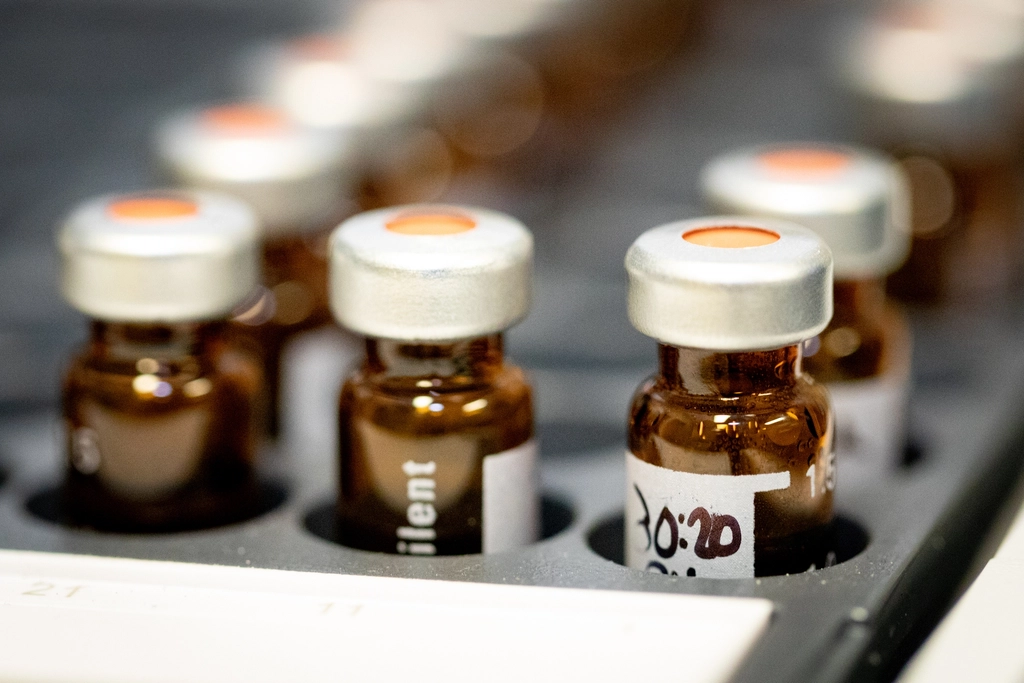
This TB-500 research peptide guide covers purity verification, quality standards, and handling for tissue repair research.
Research Compound · TB-500
TB-500 Research Peptide — Independently Verified.
TB-500 — synthetic fragment of Thymosin Beta-4. A 43-amino-acid peptide studied for actin-binding properties, soft tissue repair, and angiogenesis in preclinical models. 10mg lyophilized, HPLC + mass spec verified.
COA included with every order For laboratory research use only
HPLC Verified≥98% purity confirmed per lot
COA IncludedLot-specific certificate ships with order
Mass Spec IDMolecular identity confirmed per batch
USA OperationsVerified sourcing. Documented chain.
About This Compound
What Is TB-500?
TB-500 is a synthetic analog of Thymosin Beta-4 (Tβ4), a naturally occurring 43-amino-acid protein found in virtually all nucleated cells. The research peptide marketed as TB-500 is typically a synthetic fragment corresponding to the actin-binding domain of Tβ4, responsible for the protein’s observed effects in preclinical healing models.
In preclinical research, TB-500 is studied for its role in actin regulation, angiogenesis, and soft tissue repair. Researchers have investigated its effects on wound closure, muscle fiber regeneration, and cardiac recovery in rodent models.
CoreVionRX doesn’t manufacture peptides. What we do — rigorously — is verify every batch before it reaches our catalog.
≥98%
Purity by Reversed-Phase HPLC
HPLC separates the compound from any impurities and measures the exact purity percentage. The chromatogram is documented on your COA — not a number we made up.
MS/MS
Mass Spectrometry Identity Check
Electrospray ionization mass spectrometry verifies the molecular weight matches the compound specification. This confirms you’re getting the actual compound — not a substitute or mis-labeled batch.
Lot #
Lot-Specific Certificate of Analysis
Your COA is tied to your specific production lot — not a generic document. This is not standard practice in this market. We made it one anyway.
100%
Documented Before Listing
No compound reaches our catalog without clearing our verification process first. If documentation isn’t available for a batch, that batch doesn’t ship.
Technical Specifications
Full Product Data
Everything you need to evaluate this compound for your research protocol.
Specification
Value
Compound
TB-500 (Thymosin Beta-4 Fragment)
Origin
Synthetic analog of Thymosin Beta-4 actin-binding domain
Amino Acids
43 (full fragment)
CAS Number
77591-33-4
Form
Lyophilized powder
Vial Size
10mg per vial
Purity
≥98% by reversed-phase HPLC
Identity
Confirmed by electrospray ionization mass spectrometry
Storage (lyophilized)
−20°C, protected from light and moisture. Stable 24+ months.
Reconstitution
Bacteriostatic water — typical 1–5mg/mL
Documentation
Lot-specific COA with HPLC chromatogram — included with every order
Preclinical Research
What Researchers Study TB-500 For
All published research is preclinical — cell cultures and animal models. No human clinical trial data exists for TB-500. Here’s where the science currently stands.
Soft Tissue & Muscle Repair
TB-500 is studied in rodent wound and injury models for its effects on tendon, ligament, and muscle fiber repair. Researchers have observed accelerated wound closure and enhanced tissue regeneration compared to controls.
Goldstein AL. et al. (2005) Expert Opin Biol Ther 5(1):37-43
Angiogenesis Research
Thymosin Beta-4 and its fragments have been investigated for pro-angiogenic properties — stimulating new blood vessel formation through endothelial cell migration and tube formation assays in vitro.
Smart N. et al. (2007) Nature 445(7128):177-82
Cardiac Repair Studies
Preclinical research has investigated TB-500’s potential role in cardiac muscle repair following ischemic injury in rodent models, examining regeneration of cardiomyocytes and vasculature.
Bock-Marquette I. et al. (2004) Nature 432(7016):466-72
Why CoreVionRX
Documentation Is the Product.
Most peptide vendors claim purity. We document it. Every compound ships with independent lab verification — not because regulations require it, but because you deserve to know exactly what you’re working with.
Independent HPLC Testing
Every batch runs through reversed-phase HPLC before we list it. The chromatogram appears on your COA. Verify the peak profile yourself.
Lot-Specific Documentation
Your COA is tied to your production lot — not a template document used across all orders. “COA available upon request” is not how we operate.
Transparent About What We Are
We source and verify. We are not a synthesis lab. That honesty is deliberate — it’s the only way to build a brand worth buying from twice.
Lyophilized for Stability
Ships as lyophilized powder — stable at −20°C for 24+ months. Full integrity maintained until you’re ready to reconstitute.
Common Questions
Straight Answers.
What is TB-500 and how does it differ from Thymosin Beta-4?
TB-500 is a synthetic research peptide designed to replicate the biological properties of Thymosin Beta-4 (Tβ4), a naturally occurring 43-amino-acid protein. TB-500 corresponds to the actin-binding domain of Tβ4 — the region most studied for its effects on tissue repair and angiogenesis. Not approved for human use.
What research areas use TB-500?
TB-500 is studied in preclinical models for soft tissue healing, tendon and ligament repair, muscle fiber regeneration, angiogenesis, and cardiac recovery. All published research uses cell cultures or animal models. No human clinical trial data exists.
Is TB-500 often researched alongside BPC-157?
Yes. TB-500 and BPC-157 are frequently studied together in multi-peptide soft tissue repair protocols. They are believed to operate through distinct mechanisms — BPC-157 through nitric oxide pathways, TB-500 through actin regulation — which may produce complementary research outcomes.
How do I reconstitute TB-500?
Reconstitute with bacteriostatic water. Typical research concentrations: 1–5mg/mL depending on your protocol. Inject water slowly down the vial wall, swirl gently. Use our peptide reconstitution calculator for exact volumes.
How should TB-500 be stored?
Store lyophilized powder at −20°C, protected from light and moisture. Stable for 24+ months. After reconstitution, store at 2–8°C. Aliquot before reconstituting to avoid repeated freeze-thaw cycles.
For laboratory research use only. Not for human or animal consumption. CoreVionRX supplies research compounds to qualified laboratories and research institutions.
TB-500 Research Peptide: What to Know Before You Buy
tb-500 research peptide from CoreVionRX is verified at ≥99%% HPLC purity with mass spectrometry confirming the exact peptide sequence.
Every tb-500 research peptide vial ships with HPLC verification and a lot-specific COA.
Every vial of tb-500 research peptide ships with a lot-specific certificate of analysis so you can verify exactly what is in the vial you received.
CoreVionRX tb-500 research peptide is verified by independent third-party testing — mass spectrometry confirms sequence identity and HPLC confirms purity.
Store tb-500 research peptide as a lyophilized powder in cool, dark conditions; once reconstituted, keep refrigerated and use within your protocol window.
For accurate reconstitution of tb-500 research peptide, use the peptide calculator to calculate the exact water volume needed.
Researchers working with tb-500 research peptide should confirm ≥99%% HPLC purity and a lot-specific COA with every order.
For reconstitution, add bacteriostatic water slowly and store tb-500 research peptide refrigerated after mixing. Use the peptide calculator to get concentration right.
When sourcing tb-500 research peptide, the most important check is purity: every CoreVionRX vial is verified at ≥99% HPLC with a lot-specific COA.
Peer-reviewed research on tb-500 research peptide is indexed at PubMed. For research use only.
All CoreVionRX research peptides ship with a lot-specific COA, ≥99%% HPLC purity, and mass-spec identity confirmation. Use our reconstitution calculator for prep. For research use only.
Sourcing verified tb-500 research peptide is the first step in any reliable research protocol.