In the day-to-day reality of peptide research, the hardest challenge isn’t designing your protocol—it’s maintaining consistency. When you’re running a compound across multiple experiments, different team members, and weeks of work, tiny variations in handling quietly compound into significant outcome differences. That’s why GLP-3RT peptide research rewards labs that establish tight workflows from day one: clear lot tracking, verified COAs, and preparation routines that don’t change every time someone new steps up to the bench.
CoreVionRx offers GLP-3RT 30mg Research Peptide with multiple variants, which makes your documentation discipline even more important. When products have options, you need to be crystal clear about what was purchased, what was received, and what was used in each experimental run.
Set yourself up for success by sourcing directly from the GLP-3RT 30mg Research Peptide product page, then treat every incoming vial as a controlled research input—not just another item in the freezer.
What GLP-3RT Means for Your Research
For metabolic peptide research context, browse the Peptides catalog. GLP-3RT belongs to the broader category of metabolic signaling research, where labs investigate how peptide-driven pathways behave in controlled, non-clinical models. Specific study goals vary by team, but the workflow challenge is universal: you need stable, repeatable inputs so your experiment measures the biology—not the variability of your reagent.
That’s where GLP-3RT peptide demands a disciplined approach. When a run looks different from what you expected, you want to quickly rule out the mundane causes: a different lot, a different reconstitution volume, altered storage patterns, or a preparation date that nobody recorded.
For labs managing multiple compounds, the Peptides catalog provides a centralized inventory reference that keeps naming and sourcing consistent across your entire team.
Why Multi-Variant Products Demand Better Records
CoreVionRx lists GLP-3RT with “select options,” signaling multiple variants available. Even if your lab only purchases one version, your notes should always specify the exact product and variant received. Future comparisons depend on it—especially when procurement repeats and a different option gets selected unintentionally.
Build the habit of logging three things the moment your vial arrives: the product name exactly as sold, the variant or strength exactly as listed, and the lot number from the vial label. Store the COA with that lot record so nobody has to reconstruct the paper trail later.
This discipline is foundational to keeping GLP-3RT peptide work comparable across time and across researchers.
COA Review: Five Minutes Now, Weeks Saved Later
Your Certificate of Analysis isn’t paperwork to file and forget—it’s the document that makes your input defensible. Before preparing GLP-3RT peptide, confirm the COA matches your vial and contains the details you’ll need to interpret results six months from now.
Start with the lot number. The COA lot must match the vial label exactly. No exceptions. Without lot traceability, you cannot confidently compare one run to another, and that uncertainty undermines your entire dataset.
Look for the analytical method. Most peptide COAs reference HPLC-based purity profiling. You’re not trying to evaluate the lab’s methodology—you’re confirming that a method is stated, that documentation is lot-specific, and that your records will be clear enough to troubleshoot with when results shift.
If your lab already maintains COA intake standards for other CoreVionRx products, apply that same discipline to GLP-3RT peptide. Consistency in intake is one of the fastest ways to reduce long-term experimental variability.
Purity in Real-World Terms
Purity isn’t a marketing bullet point—it’s a reproducibility factor. When impurities or degradation products creep in, they add background noise to sensitive readouts. That noise doesn’t always announce itself. Sometimes it looks like a subtle trend that your team wastes hours trying to interpret biologically.
With GLP-3RT peptide, the goal isn’t perfection. It’s confidence. You want to know that your input didn’t change between the run that looked strong and the run that looked off.
That confidence comes from pairing verification with handling discipline. Verification tells you what arrived. Handling discipline protects what arrived from the moment it enters your lab.
Storage Habits That Protect Integrity
Most stability issues develop slowly. A vial left out during a busy afternoon. Pulled from cold storage repeatedly. Opened casually, then returned. Nothing looks dramatic, but outcomes drift—and you may not notice until you’re comparing datasets that should align.
For GLP-3RT peptide, the best storage habits are straightforward and realistic.
Keep bench time short. When the vial is open, treat it as focused work time. Prepare what you need, seal it, and return it to controlled storage immediately. Don’t leave it sitting while you answer emails or set up the next assay.
Minimize warm-cold cycling. If multiple uses are expected, plan your workflow so you’re not constantly removing the same container from storage. Many labs reduce cycling by preparing controlled stocks and using aliquots where appropriate for their SOP. The specific technique matters less than doing it consistently.
Standardize access behavior across your team. One researcher handles the vial quickly; another leaves it out longer. Neither is “wrong,” but the compound experiences different conditions—and that inconsistency shows up in your data. Shared habits protect shared inventory.
Preparation Math: Where Most Labs Quietly Drift
When you audit why results vary between runs, you’ll find a common culprit: concentration drift. One person reconstitutes with one volume. Another uses a different volume. Someone records the concentration in milligrams per milliliter, someone else assumes micrograms per microliter. Now two “identical” experiments aren’t identical at all.
With GLP-3RT peptide, the fix is one standard that everyone follows. Choose a reconstitution volume for your project, use it every time for that project, and document it the same way in every log entry.
A clean documentation line includes the reconstitution volume and the final concentration together. That single line prevents most misunderstandings later.
For shared conversion consistency, the Peptide Calculator page serves as a practical internal reference so your entire team calculates using the same method and the same steps.
The goal isn’t “using a calculator.” It’s ensuring GLP-3RT peptide prep stays consistent across people and across time.
A Repeatable Workflow Your Team Can Actually Follow
A good workflow doesn’t add complexity—it removes preventable variability.
Log on arrival. Record exactly what you purchased and what you received, especially important when the product has variants.
Verify the COA. Match it to the vial. Store it with the lot record so it’s always accessible.
Store immediately and consistently. Reduce bench time, reduce temperature cycling, and ensure multiple researchers follow the same storage behavior.
Prepare using one standard. One reconstitution volume for the project. If another project needs a different concentration, treat it as a separate preparation batch with clear, explicit labeling.
When you execute these steps reliably, GLP-3RT peptide becomes the stable input your research deserves.
GLP-3RT Alongside Other Metabolic Research Products
Most labs don’t work with one compound at a time. They build focused inventories aligned to study goals. In metabolic signaling programs, it’s common to keep adjacent options available for comparisons, method development, or controlled baselines.
If your lab compares against other products, maintain clean documentation and separated workflows. For example, Glp-lr3 30mg Research Peptide appears in the same CoreVionRx catalog as GLP-3RT, and it should be treated as a completely separate input with its own preparation and storage records.
Comparison only carries meaning when handling standards are identical across conditions. Different preparation volumes between compounds create hidden variables that make interpretation harder, not easier.
Quick Diagnostic Checklist
Before you assume your protocol needs redesigning, check these fundamentals:
Was the reconstitution volume identical across all GLP-3RT peptide runs? Did the lot number change without being recorded? Did storage access patterns shift, with more frequent warm-cold cycling? Were concentrations recorded in inconsistent units? Did a new researcher follow different preparation habits without realizing it?
Most labs find their answer in these questions. Fixing intake discipline is almost always faster than redesigning experiments.
Wrapping Up: Consistency Is the Secret
The labs getting the cleanest outcomes aren’t doing anything magical. They’re executing basics with consistency. GLP-3RT peptide research becomes dramatically easier to interpret when your input is traceable, your COA is verified, storage is consistent, and preparation math is standardized.
Source from GLP-3RT 30mg Research Peptide, standardize calculations using the Peptide Calculator, and keep your inventory organized through Peptides. When inputs stay stable, your results become clearer and your troubleshooting faster.
Research Use Disclaimer: GLP-3RT peptide is sold for laboratory research use only. It is not intended for human consumption, diagnostic purposes, or therapeutic applications. Researchers should follow all applicable institutional and regulatory guidelines.
Frequently Asked Questions
How do I keep GLP-3RT prep consistent across multiple researchers?
Choose one standard reconstitution volume for your project, require everyone to log volume and concentration in the same format, and keep calculations consistent. Using Peptide Calculator as a shared reference prevents conversion mistakes and ensures everyone follows the same method.
Why does lot tracking matter so much for GLP-3RT research?
Lot tracking lets you compare runs cleanly. If results shift, you can quickly determine whether the change aligns with a lot change—one of the most common hidden causes of variability in peptide research.
How should I handle GLP-3RT storage to maintain stability?
Keep bench time minimal, avoid repeated warm-cold cycling by planning your access, and standardize storage behavior across your entire team. These three habits protect peptide integrity more effectively than any single dramatic measure.
Peptide blends are convenient, but they magnify workflow errors. With a single compound, one mistake might be obvious. With a blend, mistakes hide inside assumptions. Someone preps using a different volume, someone else labels it loosely, and now your supposedly identical setup across runs isn’t identical at all.
That’s why CJC-1295 + Ipamorelin peptide research demands discipline from day one—not eventually, not when problems appear, but from the first vial you open. You need to trace the lot, verify documentation, store consistently, and prepare the same concentration every single time. When those fundamentals are locked in, the blend becomes a stable input and your study can focus on what it’s actually designed to measure.
If you’re sourcing this growth hormone secretagogue blend, start with the CJC-1295 + Ipamorelin 10mg product page and treat it as a controlled material from the moment it arrives.
What This Blend Means in Your Research Workflow
In research contexts, CJC-1295 and Ipamorelin are commonly referenced in growth-hormone-axis signaling studies and related experimental models. The blend format lets researchers observe pairing behavior under a consistent setup. The lab reality is straightforward: a blend reduces preparation steps, but it increases the importance of meticulous recordkeeping.
With CJC-1295 + Ipamorelin peptide, your team should be able to answer these questions without hunting through notebooks:
Which lot did we use? Where is the COA for that exact lot? What volume did we reconstitute with? What concentration did we label and log? How was the vial stored and accessed between runs?
If your team can answer these quickly, troubleshooting stays simple. If not, you’re flying blind.
For inventory consistency across your peptide program, the Peptides page keeps product naming and sourcing standardized.
Why Blends Create More Variability Than Single Compounds
Most variability doesn’t come from dramatic failures—it comes from small workflow drift that accumulates when different people handle the same material.
Someone reconstitutes with a different volume and doesn’t record it clearly. Someone uses a vague label like “CJC/IPA stock” instead of logging the exact concentration. The vial gets pulled from controlled storage repeatedly during a busy run week. A new lot arrives and gets used without being tied to the experiment record.
Then, when results shift, you waste time debating whether biology changed when the real change was the input all along.
That’s why CJC-1295 + Ipamorelin peptide needs tighter habits than a single-compound workflow ever would.
COA Review: Your Five-Minute Quality Gate
A Certificate of Analysis isn’t a formality—it’s part of your experimental record. Before any prep, verify that the COA matches the vial and gives you traceability you can defend six months from now.
1) Lot number match is non-negotiable
Confirm the lot or batch number on the vial matches the COA exactly. If it doesn’t match, stop and resolve it. Without lot traceability, comparing runs across time becomes guesswork, and guesswork isn’t research.
2) The analytical method should be stated
Purity only carries meaning when tied to a stated method. Many peptide COAs reference HPLC profiling for purity verification. Your goal isn’t to become an analytical chemist—it’s to confirm the method is stated and documented clearly enough that your lab can record it consistently.
3) The document should look lot-specific
A COA should feel tied to the exact lot you received, not like a generic template that could apply to any vial. Lot-specific documentation makes troubleshooting faster when results drift later—and they sometimes do.
This is especially important for CJC-1295 + Ipamorelin peptide because you’re using one vial to represent two distinct inputs. Your documentation is what prevents confusion down the road.
Purity in Practical Terms: Quality for Blends
Purity matters for the same reason it matters with any research material: it supports repeatability. Impurities or degradation products can add background noise that masquerades as inconsistent signaling or variable response. The most frustrating part? That noise can look exactly like real biology.
With CJC-1295 + Ipamorelin peptide, purity is only half the equation. The other half is what happens after the vial arrives. Even a pristine material becomes inconsistent if your lab repeatedly warms and cools it, leaves it exposed during prep, or prepares it at different concentrations depending on who’s at the bench.
Think of purity verification as your baseline confidence, and your SOP as what actively protects that baseline.
Storage and Handling: Protecting Blend Stability
The most common storage mistakes aren’t dramatic—they’re gradual.
The vial stays out too long during prep. It gets temperature-cycled more often than anyone tracks. Multiple team members access it with different habits and different bench-time behavior.
With CJC-1295 + Ipamorelin peptide, your goal is keeping handling consistent so the input doesn’t change between week one and week four.
Keep exposure time short
When you open the vial, treat it as focused work. Prepare what you need, seal it, and return it to controlled storage. Avoid leaving it out while handling unrelated tasks. Short bench time is one of the easiest ways to protect stability.
Avoid repeated warm-cold cycling
Repeatedly removing the same vial from cold storage, letting it warm, opening it, and returning it can increase gradual degradation risk. If repeated use is expected, plan your workflow to reduce how many times the same container is cycled.
A practical approach is preparing a controlled stock under one documented routine, then working from smaller portions when appropriate for your SOP. The specific method matters less than doing it the same way every time.
Standardize storage behavior across the team
Two careful researchers can still create drift if their habits differ. Shared inventory needs shared habits. When storage and access behavior is standardized, CJC-1295 + Ipamorelin peptide becomes easier to run across longer timelines without creeping variability.
Preparation Math: Where Blends Introduce Extra Risk
Most peptide problems are concentration problems wearing a different costume. Not because the math is difficult, but because documentation is inconsistent.
One person writes “reconstituted” without recording the volume. Another person assumes the old volume. A third person logs units differently. Now two experiments meant to match don’t match—and nobody knows why.
For CJC-1295 + Ipamorelin peptide, choose a standard reconstitution volume for your project and commit to it. Then document it in a way that no one can misinterpret later.
A clean prep log line includes:
Reconstitution volume Final concentration Prep date Lot number Initials of preparer
That one line removes most assumptions—and most errors.
If your team wants a shared reference for conversions, the Peptide calculator keeps the method consistent even when the person doing the prep changes.
A Repeatable Workflow for Your Team
This workflow keeps your setup clean without adding unnecessary friction.
Step 1: Receive and log
Log arrival date, product name, and lot number the day the vial arrives. Save the COA with the lot record so anyone can retrieve it without digging.
Step 2: Verify before first use
Match the COA lot number to the vial label. Confirm the analytical method is stated. Ensure the COA looks lot-specific.
Step 3: Store immediately and consistently
Move the vial into controlled storage quickly. Avoid long bench time. Keep access behavior consistent across your team.
Step 4: Prepare using one standard
Pick a reconstitution volume standard for your project’s CJC-1295 + Ipamorelin peptide work and don’t improvise mid-study. If another project needs a different concentration, treat it as a separate prep batch with clear labeling.
Step 5: Track usage across runs
Record which lot and prep batch was used in each run. If results drift, you can immediately check whether the drift aligns with a lot change, a prep change, or a storage access pattern. This turns troubleshooting from a debate into a quick check.
Avoiding Mix-Ups with Related Products
Many labs run multiple peptides under a shared procurement program. That’s efficient, but it increases the risk of assumption drift if labeling and logs aren’t strict.
If your lab also stocks Tirzepatide or PT-141, keep them logged as separate inputs with separate prep standards and separate batch records. The similarity is in how people talk about them, not in how you should document them.
To keep procurement organized and naming consistent across your team, maintain one shared inventory reference using Peptides so everyone pulls the same product names and links.
Quick Diagnostics: Before You Assume the Protocol Failed
If your results start looking inconsistent, check these fundamentals before redesigning anything:
Did the reconstitution volume change between runs? Did the lot number change without being recorded? Was the vial accessed more often than usual, increasing temperature cycling? Did multiple researchers label stocks differently? Were concentrations recorded in inconsistent units or formats?
Most labs find the issue right here. Fixing intake and prep discipline is almost always faster than redesigning the entire experiment.
Wrapping Up: Keep the Blend Stable, Keep Your Data Clean
Blends are only “easy” when the workflow is strict. CJC-1295 + Ipamorelin peptide becomes a stable research input when the lot is traceable, the COA is verified, storage is consistent, and preparation math is standardized across your team.
For the cleanest path, source from CJC-1295 + Ipamorelin 10mg, standardize conversions with the Peptide calculator, and keep inventory references consistent through Peptides. When your input stays stable, your results become easier to interpret and far easier to reproduce.
Research Use Disclaimer: CJC-1295 + Ipamorelin peptide is sold for laboratory research use only. It is not intended for human consumption, diagnostic purposes, or therapeutic applications. Researchers should follow all applicable institutional and regulatory guidelines.
Frequently Asked Questions
How do I keep CJC-1295 + Ipamorelin prep consistent across multiple researchers?
Choose one standard reconstitution volume for your project, require everyone to log volume and concentration in the same format, and store the COA with the lot record. Using Peptide Calculator as a shared conversion reference prevents math drift between team members.
Why does lot tracking matter more for a peptide blend?
Because you are using one vial to represent two distinct inputs. If results drift, lot tracking is the fastest way to confirm whether the input changed, helping you isolate variables efficiently.
What is the best way to store CJC-1295 + Ipamorelin peptide?
Keep bench time minimal, avoid repeated warm-cold cycling by planning your access, and standardize storage behavior across your entire team. These habits protect blend stability more effectively than any single dramatic measure.
TB-500 Peptide Research Guide: Quality Checks & Handling
Plenty of peptide projects don’t stumble because the research question is weak—they falter because the workflow became inconsistent. One researcher prepares a vial one way, another assumes a different concentration three weeks later, and suddenly you’re debating results that were never truly comparable. With TB-500 peptide (also known as Thymosin Beta-4 fragment), that kind of drift is entirely avoidable—if your team treats the compound like a controlled input from the moment it arrives.
This guide cuts straight to what matters for repeatability: confirming lot documentation, protecting integrity through storage and handling, and standardizing reconstitution math so every preparation matches the next without guesswork.
TB-500 is commonly referenced as a synthetic peptide related to thymosin beta-4 fragments, frequently studied in models examining tissue response, cellular activity, and wound healing pathways. In practical lab terms, the value isn’t the label—it’s that TB-500 can serve as a defined, consistent research material when you control the variables that teams often forget to manage.
That’s why TB-500 peptide research thrives when your lab can answer these four questions quickly:
Which lot did we use, and where is the record? Where is the COA for that exact lot? What concentration did we prepare, and what reconstitution volume did we use? How was the vial stored and accessed throughout the study timeline?
If your team can answer these without hunting through notebooks, troubleshooting stays simple. If not, you’re troubleshooting in the dark.
Why Workflow Discipline Matters More Than Most Labs Admit
Peptide variability rarely announces itself. It appears as small outcome shifts that seem “interesting” at first and frustrating later. With TB-500 peptide, the most common sources of drift aren’t mysterious—they’re everyday workflow issues:
A vial sits out longer than it should during preparation. The same vial gets pulled from controlled storage repeatedly, warming and cooling many times. Two researchers reconstitute using different volumes without clear documentation. A new lot arrives and gets used without being tied to the experiment record.
The fix isn’t complex. It’s a standard intake routine and a standard prep routine that everyone follows—no improvisation, no assumptions.
COA Review: Your Pre-Flight Checklist
A Certificate of Analysis isn’t administrative paperwork. It’s part of your experimental record. Before you prepare TB-500 peptide, confirm the COA matches the vial and includes the traceability details your lab depends on.
Lot number matching is non-negotiable
Start with the lot or batch number. The COA lot must match the vial label exactly. If it doesn’t match, pause and resolve it before doing anything else. Without lot traceability, comparing runs across time becomes speculation—and speculation isn’t science.
Confirm the analytical method is stated
Purity is only meaningful when tied to a stated analytical method. Many peptide COAs reference HPLC profiling for purity verification. Your goal isn’t to critique the method—it’s to confirm a method is clearly documented so your lab can record it consistently and interpret the purity value the same way every time.
Ensure the document is lot-specific
A COA should look like it belongs to that specific lot. Generic documentation creates generic records, and generic records breed confusion when you’re trying to troubleshoot six months later.
If your lab already follows COA intake standards for other products, apply that same routine here. The process should be identical whether you’re logging TB-500 peptide, BPC-157 Peptide, or GHK-Cu 100mg.
Purity: What “Quality” Really Means in Your Lab
In real research workflows, purity isn’t a specification to brag about—it’s a reproducibility factor. Impurities or degradation products can introduce background noise that masquerades as inconsistent biology. That noise can be subtle, which makes it dangerous, because teams may spend days interpreting patterns that were actually created by input variability.
With TB-500 peptide, the goal is confidence in your starting point and protection of that starting point through disciplined handling. Even high-quality material becomes inconsistent if it’s repeatedly exposed to humidity, temperature fluctuations, or different preparation approaches.
Think of purity verification as your baseline confidence—and your SOP as the system that preserves that baseline across your entire study.
Storage and Handling: Small Habits, Big Impact
Most peptide integrity issues come from unremarkable problems. A vial exposed to ambient conditions longer than planned. Repeatedly cycled in and out of controlled storage. Opened casually when the lab is busy. Over time, these small lapses accumulate into measurable drift.
For TB-500 peptide, the best storage habits are simple and realistic.
Keep exposure time short
When the vial is opened, treat it as focused work. Prepare what you need, seal it, and return it to controlled storage quickly. Avoid leaving the vial open while you handle unrelated tasks—those minutes matter.
Avoid repeated temperature cycling
Repeated warm and cold cycles can increase degradation risk over time. If your workflow requires multiple uses, plan around minimizing how often the same container is warmed, opened, and returned. Many labs reduce cycling by preparing a controlled stock and working from smaller portions when appropriate for their internal SOP.
Standardize storage behavior across your team
This is where labs often struggle silently. Two researchers can both be careful, but if their habits differ, the compound experiences different conditions. Shared inventory demands shared habits—and shared habits protect shared outcomes.
Reconstitution Math: Where “Peptide Problems” Actually Start
In many labs, the biggest hidden variable isn’t the compound—it’s the concentration. Not because anyone is careless, but because documentation is often incomplete. Someone writes “reconstituted TB-500” without recording the volume. Someone else assumes the old standard. Now two experiments meant to match don’t match, and nobody knows why.
With TB-500 peptide, the solution is straightforward: choose one standard reconstitution volume for your project and use it every time. Then document it in a format that’s impossible to misread later.
A clean documentation line records the reconstitution volume and the resulting concentration together, every single time. When those two numbers always appear together, assumptions disappear.
For a shared standard on conversions and dilution calculations, the Peptide calculator ensures everyone does the math the same way using the same method. The tool itself isn’t the point—consistency is.
Your Repeatable TB-500 Workflow
If you want clean outcomes, treat intake and prep as part of the experiment—not overhead to rush through.
Receive and log. Log arrival date, product name, and lot number the day the vial arrives. Save the COA in a shared location tied to that lot so any team member can retrieve it instantly.
Verify before first use. Match the COA lot number to the vial label. Confirm the analytical method is stated. Make sure the document meets your internal quality standards.
Store immediately and consistently. Move the vial into controlled storage quickly. Reduce bench time and temperature cycling. Ensure multiple team members follow the same access behavior.
Prepare using one standard. Choose one reconstitution volume for your project’s TB-500 peptide work and stick to it. If another project needs a different concentration, treat it as a separate preparation batch with clear, explicit labeling.
Track usage across experiments. Record which lot and which preparation batch was used for each run. If outcomes drift, you can immediately check whether the shift aligns with a lot change, a prep date change, or a storage access pattern.
When your workflow is consistent, TB-500 peptide becomes the stable input your research needs.
TB-500 in a Broader Peptide Research Program
Most labs don’t work in isolation with one compound. They maintain a focused inventory aligned to study design. In tissue-response and cellular activity programs, it’s common to see TB-500 peptide alongside other well-characterized research peptides.
Some teams pair TB-500 peptide work with BPC-157 research guides or GHK-Cu research guides for related tissue-response studies. Product references: BPC-157 Peptide and GHK-Cu 100mg. Different compounds, identical reliability rules: log the lot, verify the COA, store consistently, prepare consistently, track what was used.
For a centralized view that keeps purchasing and naming consistent across your inventory, the Peptides catalog helps keep everything organized in one place.
Quick Diagnostic: Before You Redesign Your Protocol
If results ever start feeling noisy, check these fundamentals first:
Was the reconstitution volume identical across all runs for TB-500 peptide? Did the lot change without being recorded in experiment notes? Did the vial experience more warm-cold cycling than usual? Were concentrations recorded in consistent units across team members? Did different researchers handle the vial with different bench-time habits?
Most labs find the root cause right here. Fixing intake and preparation discipline is almost always faster—and cheaper—than redesigning your experiment.
Wrapping Up: Stable Inputs, Clean Results
The biggest advantage you can give your research is a stable, traceable input. TB-500 peptide becomes dramatically easier to work with when the lot is documented, the COA is verified, storage is consistent, and preparation math is standardized across your team.
Start with TB-500 Peptide (Thymosin Beta-4), keep your inventory organized through Peptides, and standardize calculations with the Peptide calculator. When your workflow stays consistent, your outcomes become easier to interpret and far easier to reproduce.
Research Use Disclaimer: TB-500 peptide is sold for laboratory research use only. It is not intended for human consumption, diagnostic purposes, or therapeutic applications. Researchers should follow all applicable institutional and regulatory guidelines.
Frequently Asked Questions
How should I store TB-500 peptide for research?
Store TB-500 in controlled cold storage with minimal bench exposure. Avoid repeated temperature cycling by planning your access, and always return the vial to storage immediately after use. Standardize these storage habits across your entire team for consistent results.
Why is lot tracking important for TB-500 research?
Lot tracking lets you compare runs cleanly over time. If outcomes shift, you can quickly determine whether the change aligns with a lot change, a prep change, or a storage access pattern—saving weeks of troubleshooting.
How do I prevent concentration errors with TB-500?
Choose one standard reconstitution volume for your project and document it clearly. Require that every prep log includes both volume and final concentration together. Using a shared Peptide Calculator reference keeps conversions consistent across all researchers.
Some peptides attract attention through dramatic claims and viral attention. Others earn their place in research programs through quiet reliability — the ability to produce consistent, traceable results across long study timelines. Epitalon falls decisively into the second category.
As a synthetic tetrapeptide (Ala-Glu-Asp-Gly) originally developed by Russian researchers, Epitalon has become a staple in longevity-focused research programs worldwide. But the labs that get the most value from it don’t start with big theoretical claims. They start with something more practical: inputs that stay stable, documentation that holds up to scrutiny, and handling protocols that keep the compound consistent from receipt through final analysis.
If your research touches aging-related signaling, cellular senescence, or telomerase activity, this guide will help you build an Epitalon research workflow that produces cleaner data and fewer mysterious variables.
Why Epitalon Remains Relevant in Longevity Research
Longevity science attracts complicated theories and bold predictions. In practice, though, working researchers care about two surprisingly practical questions: can you control the variables, and can you repeat the outcome?
That’s why Epitalon peptide is typically treated as a controlled research input rather than a novelty compound. Its relatively short sequence and defined structure make it analytically straightforward. When sourced properly, it’s amenable to standard quality verification methods. And its stability profile, while not indefinite, is manageable with routine laboratory practices.
The compound’s research interest stems from its relationship to the pineal gland peptide epithalamin and its proposed influence on telomerase expression — the enzyme complex that maintains telomere length during cell division. Whether and how this mechanism translates to organism-level effects remains an active research question, but the molecular hypothesis is well-defined enough to support rigorous investigation.
Defining Epitalon in Research Terms
In practical laboratory terms, Epitalon is a defined synthetic peptide used in non-clinical investigations exploring aging-related signaling pathways, cellular response patterns, and longevity-adjacent biological mechanisms. The key word is defined — a defined peptide is only as good as your ability to confirm its identity, track its lot history, and handle it consistently enough that the compound itself doesn’t become an experimental variable.
Labs that work successfully with Epitalon peptide establish a standard operating routine early. It doesn’t need to be elaborate. It just needs to be consistent. A clean workflow answers these questions quickly:
Which lot did we use for this experiment?
Where is the COA for that specific lot?
What concentration did we prepare, and when?
How was the material stored and accessed throughout the study?
If you can’t answer these questions, troubleshooting becomes guesswork — and your data becomes harder to defend.
Purity and Identity: Foundations of Credible Studies
Peptide research can be unforgiving because impurities and degradation products can produce effects that look biologically real, especially in sensitive assays. Longevity-oriented studies are particularly vulnerable: they often involve subtle changes across extended timeframes, small shifts in molecular markers, and observation windows that span weeks or months.
With Epitalon peptide, purity and identity aren’t marketing bullet points. They’re reproducibility requirements. If your compound is inconsistent, you can spend weeks interpreting patterns that actually reflect batch variation or handling drift. The more time and effort your study demands, the more critical it becomes to lock down your inputs from day one.
This is where your Certificate of Analysis becomes indispensable.
COA Verification: What Actually Matters
A Certificate of Analysis shouldn’t be paperwork you file and forget. It should be one of the first documents you review before any vial enters your workflow.
This must match your vial label exactly. Lot traceability is the backbone of meaningful comparisons across time. If the numbers don’t match, stop and resolve the discrepancy before proceeding.
Stated Testing Method
Purity means little without a stated analytical method. HPLC profiling is standard for peptide purity assessment, and the method details (column type, gradient, detection wavelength) should be clearly documented.
Purity Value with Context
A percentage is useful only when presented with enough detail for your team to interpret and record consistently. Look for chromatogram integration reports, not just a single number.
Lot-Specific Documentation
A legitimate COA feels tied to a specific batch. Generic-looking documents that could have been attached to any vial are a warning sign. If your supplier applies the same discipline to BPC-157, TB-500, and Epitalon peptide, that’s a strong indicator of systematic quality control.
Red Flags in Supplier Documentation
Problematic documentation is usually obvious once you know what to look for: missing lot identifiers, unstated analytical methods, vague purity claims, or generic-appearing certificates. Even if the underlying material turns out acceptable, weak documentation makes your research harder to defend and nearly impossible to troubleshoot systematically.
With Epitalon peptide, long study timelines make documentation especially valuable. If results drift over weeks, you need to know what changed and when — without that paper trail, you’re stuck guessing.
HPLC Profiles: Interpreting Purity in Context
HPLC analysis provides a chromatographic profile rather than a single number. A chromatogram dominated by one primary peak suggests the sample consists mainly of the intended compound. Multiple significant peaks suggest impurities, degradation products, or synthesis byproducts that warrant investigation.
However, HPLC isn’t the whole story. A clean chromatogram doesn’t protect your compound after it arrives in your lab. Handling habits can quietly degrade stability over time — especially when vials are repeatedly opened, exposed to humidity, or cycled through temperature extremes.
The most reliable labs treat HPLC as a baseline check, then protect that baseline through disciplined handling throughout the study period.
Storage and Handling: Preventing Silent Degradation
Most peptide instability isn’t dramatic. It’s gradual. A vial sits on the bench too long. It’s pulled from cold storage repeatedly. It’s opened in humid conditions more often than necessary. Weeks later, results are noisy and nobody can explain why.
With Epitalon peptide, the simplest protection is a consistent routine that minimizes exposure and temperature variation:
Keep Material Dry and Exposure Brief
Lyophilized peptides offer good stability, but they still require dry handling. During vial access, work efficiently and avoid leaving containers open while attending to other tasks. Every minute of exposure is an opportunity for moisture uptake.
Avoid Temperature Cycling
Repeated warming and cooling accelerates degradation. If your protocol requires multiple accesses, plan for aliquoting after reconstitution so you don’t keep cycling the same container. One freeze-thaw cycle on a Monday can be invisible. Twenty cycles over a month rarely are.
Store Consistently, Not Conveniently
The best storage location is the one that stays stable and is used consistently by your entire team. When storage habits differ between researchers, stability becomes unpredictable and drift becomes likely. Document your standard and stick to it.
Reconstitution: The Math That Matters
Most peptide preparation errors aren’t sophisticated scientific mistakes. They’re concentration errors. The pattern is simple: one team member reconstitutes with one volume, another assumes a different standard, and suddenly the same “dose” isn’t the same at all.
The solution isn’t more complexity. It’s standardization. Pick a reconstitution volume that works for your workflow. Calculate concentration as amount divided by volume. Record the result in the same format every time. If multiple people prepare solutions, use one shared reference — such as a Peptide Calculator — so everyone arrives at the same numbers using the same method.
A Five-Step Workflow for Clean Epitalon Studies
Step 1 — Receive and log: On arrival, record the date, product name, and lot number. Save the COA in a shared location linked to your inventory record. This makes later comparisons possible.
Step 2 — Verify before first use: Match COA lot numbers to vial labels. Confirm the stated purity method meets your standards. Resolve discrepancies before the first preparation.
Step 3 — Store with discipline: Move vials into controlled storage promptly. Define shared access habits that limit exposure. Don’t leave material out during unrelated work.
Step 4 — Prepare using one standard: Choose a standard reconstitution volume for your project. Document it clearly. If different projects need different concentrations, keep preparations separate and labeled unambiguously.
Step 5 — Track usage: For studies spanning multiple timepoints, record which lot and preparation batch was used in each run. If results drift, you’ll quickly see whether the shift aligns with a new lot, new preparation, or storage change.
Common Mistakes That Create “Mystery Results”
When Epitalon peptide outcomes feel inconsistent, check these fundamentals before redesigning your protocol:
Different reconstitution volumes used by different team members
Lot numbers not recorded in experiment notes
Vial repeatedly cycled in and out of cold storage
Preparation details kept in personal notes rather than shared logs
Aliquots labeled inconsistently, leading to mix-ups
None of these require new science to fix. They require tighter routines.
Integrating Epitalon Into a Broader Peptide Research Program
Many labs work with multiple peptides across different projects. If that’s your situation, the smartest approach is standardizing your documentation and handling expectations across your entire inventory — whether you’re managing CJC-1295 + Ipamorelin, repair-pathway peptides like BPC-157, or Epitalon peptide for longevity investigations. The reliability rules don’t change: verify the lot, store consistently, prepare consistently, track what you used.
Conclusion: Stability in Your Inputs Enables Clarity in Your Data
Reliable Epitalon research becomes straightforward when you treat compound handling as part of the experiment rather than an administrative afterthought. Verify your material. Log the lot. Standardize preparation across your team. When your inputs stay stable, your outcomes become clearer, your comparisons cleaner, and your troubleshooting far more efficient.
Research Use Disclaimer: Epitalon is for laboratory research use only. It is not approved for human consumption, therapeutic application, or diagnosis. This content is educational and informational, not medical or research advice. All studies should follow applicable institutional and regulatory guidelines.
Frequently Asked Questions
How can research labs prevent concentration errors with Epitalon?
Choose one reconstitution standard for your project, document it clearly, and ensure everyone uses the same volume and calculation method. A shared peptide calculator tool helps keep conversions consistent across team members. Record concentrations in the same units and format every time.
Is HPLC purity percentage alone sufficient to trust a peptide batch?
Purity percentage is important but insufficient by itself. It should be tied to a stated analytical method and a lot-specific COA. Equally important is handling discipline after receipt — even high-purity material degrades with poor storage, repeated temperature cycling, or moisture exposure.
What documentation should labs maintain minimum for Epitalon studies?
At minimum: lot number, COA location and verification, arrival date, storage conditions, reconstitution volume, resulting concentration, preparation date, storage location, and which experiments used which preparation batch. This paper trail makes troubleshooting possible when results drift.
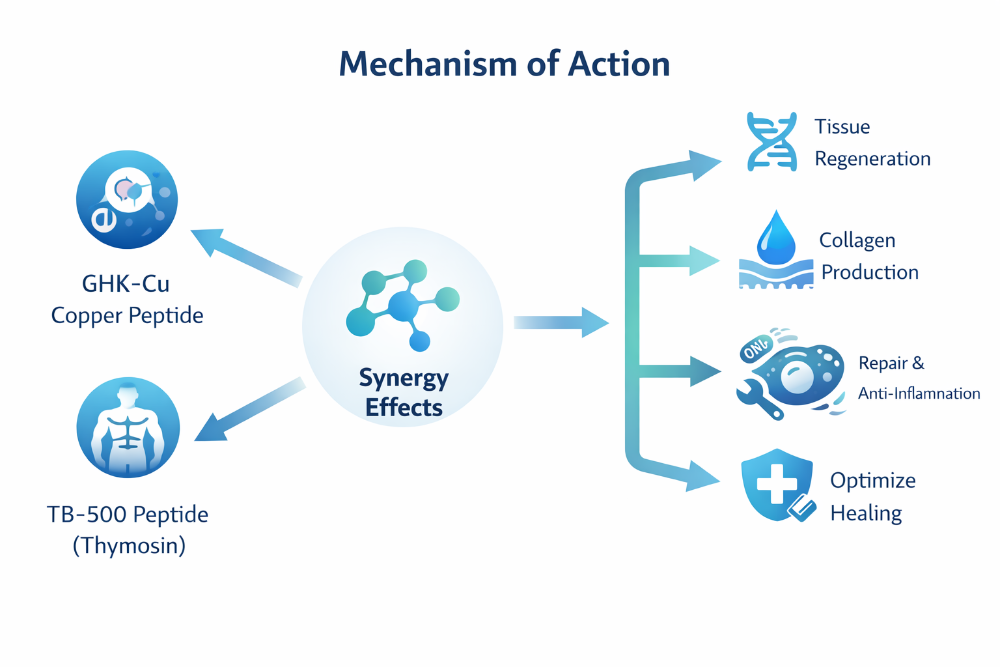
If you’re new: this is the “why it matters” section. GLOW is designed to explore how multiple repair-related pathways can overlap in a coordinated way.
What is the GLOW peptide protocol? GLOW is a research-oriented multi-peptide framework combining
GHK-Cu (a copper-binding peptide studied for tissue remodeling signals),
BPC-157 (studied for cytoprotective and repair signaling in preclinical models),
and TB-500 (a thymosin beta-4 fragment studied for cell migration and tissue repair coordination).
It’s popular because it reflects a “systems” approach instead of betting everything on one signal.
What GLOW Is (and What It Isn’t)
Let’s keep this clean. Online you’ll see two extremes: hype like it’s magic, or people calling everything fake.
Reality sits in the middle: peptides can be useful research tools, but you have to talk about them with strict boundaries.
CoreVionRX stance: This article is education and research discussion only. Not medical advice, not a treatment plan, not a promise. These compounds are not FDA-approved therapies for human use.
The GLOW protocol is best understood as a framework:
a structured way to think about how separate signaling domains may overlap:
(1) tissue remodeling signals, (2) inflammatory signaling, (3) cellular migration/repair coordination, and
(4) collagen-related pathways and extracellular matrix organization.
Quick definitions (beginner friendly)
GHK-Cu: a copper-binding tripeptide studied for gene expression modulation and tissue remodeling signaling.
BPC-157: a synthetic peptide studied in preclinical models for cytoprotective and repair signaling (tissue integrity contexts).
TB-500: a thymosin beta-4 fragment studied for cellular migration, actin regulation, and repair coordination pathways.
Why Multi-Peptide Systems Became the Default (Biohacker Logic)
Here’s the honest explanation: stacking is an attempt to reduce bottlenecks.
If one signal relates to cellular migration and another relates to remodeling organization, the “systems” idea is:
overlapping signals might create a more complete environment than a single signal alone.
The “single-signal” problem
Even if a single compound triggers a repair-related signal, the system can still be limited by inflammation, ECM structure, mobility, or recovery constraints.
That’s why results can be inconsistent when people chase one magic ingredient.
The “systems” hypothesis
A coordinated set of signals can theoretically create a better overall environment for repair processes.
Not a guarantee — just a more interesting research question: “What changes when multiple signals overlap?”
Mechanisms & Synergy Logic (Clean Version)
Simplified pathway role model. Educational diagram, not a clinical claim.
1) GHK-Cu: remodeling signals + copper context
GHK-Cu gets labeled “skin peptide” online, but that’s a lazy shortcut. The research interest comes from how copper-binding peptides may influence
remodeling-related signaling and how copper context intersects with collagen pathways and gene expression signals in cell models.
BPC-157 is widely discussed because preclinical research explores it in models where tissue integrity and repair signaling are being investigated.
The clean framing: it’s studied in scenarios tied to protective/cytoprotective signaling and tissue stress contexts.
3) TB-500: migration + coordination logic
TB-500 is commonly discussed around cell migration, actin-related dynamics, and repair coordination (thymosin beta-4 fragment research).
The reason it’s popular in stacks is simple: repair requires organization and movement, not just “growth.”
Direct Answer (AEO): GLOW’s synergy concept is that each peptide maps to a different “layer” of the repair conversation:
GHK-Cu (remodeling/collagen signaling context), BPC-157 (tissue integrity & protective signaling in models), TB-500 (migration/coordination logic).
Overlap can be more complete than a single-signal approach.
Peer-reviewed starting points people cite in these discussions:
Quality, Sourcing & How to Read a COA (Without Getting Played)
Real talk: most problems come from contamination, mislabeling, bad handling, or fake COAs.
If you care about results, you should care about proof.
What a real COA typically includes
Identity confirmation
Look for mass spectrometry (MS) or equivalent. Purity without identity can still be the wrong compound.
Purity testing
HPLC purity is common. Real reports show method details + sample ID + chromatogram—not just a number.
Batch specificity
COA should be batch-specific. If the vendor reuses the same COA, treat it as marketing.
Red flags
No lab name, no method, no sample ID, no date.
“99.9%” for every peptide, every time.
No handling or storage guidance.
Dodging questions about test methodology.
Reality: The best marketing is a clean COA from a credible third-party lab with real metadata. Everything else is noise.
Risk Framing & Logic (Research-First, Not Hype)
The internet loves “side effects lists,” but most lists are trash because they mix animal data, anecdotes, and guesses.
Correct way to think about this: uncertainty management. Unknown isn’t automatically “safe” or “danger.”
These compounds appear in research communities and preclinical literature.
Human-quality clinical outcome data is limited for many online use-cases.
Risk is dominated by sourcing + handling quality, not just the molecule.
Online content is not a substitute for a qualified clinician.
Compliance: CoreVionRX products are intended for research and educational purposes only. Not for human consumption.
How Researchers Design a Protocol (Without Turning It Into Bro-Science)
People always ask “what’s the dose?” — but that’s where online content turns messy fast.
Better question: what variables are controlled, and what outcomes are measured?
Beginner model: Learn the basics first: COA, batch, stability, storage, and what “research-only” actually means.
Start with one clear research goal (skin remodeling signals vs recovery observation, etc.).
Track 2–3 consistent markers instead of 20.
Don’t change five variables at once — you learn nothing.
Pro move: use this same product card component across all peptide articles so the UX stays uniform.
Note: This article is educational. Product availability/pricing can change. Always refer to the product page for canonical details.
FAQ (Clear, Snippet-Ready)
GLOW is a research-oriented multi-peptide framework that combines GHK-Cu, BPC-157, and TB-500 to explore
overlapping signaling roles as a systems approach rather than a single-signal approach.
The combination reflects a synergy hypothesis: each peptide maps to a different layer of the “repair conversation”
(remodeling/collagen context, tissue integrity signaling in models, and cellular migration/coordination logic).
No. This is research-only education. These compounds are not FDA-approved therapies for treating disease.
This article is not medical advice.
Batch-specific COAs with method details, identity confirmation (often MS), credible HPLC reporting,
and documentation of handling/storage. Most bad outcomes come from contamination, mislabeling, or fake testing.
Define one goal, track a small number of consistent markers, avoid changing multiple variables at once,
and prioritize quality/documentation over hype.
Endotoxin Testing in Peptides: Why Purity Isn’t Enough
A peptide certificate showing 99% chemical purity looks reassuring on paper. But that number alone tells an incomplete story — and relying on it exclusively can quietly undermine your research. The hidden danger in high purity peptides is one that even experienced researchers miss: chemical purity and biological cleanliness are not the same thing.
Here’s what many researchers discover too late: high purity peptides can simultaneously harbor endotoxin levels that far exceed pharmaceutical safety limits. A compound can be essentially pure from a chemical perspective yet biologically contaminated in ways that distort your assays, confound your data, and in therapeutic research contexts, raise serious safety concerns.
Understanding peptide endotoxin levels and implementing rigorous endotoxin testing peptides protocols isn’t optional for serious research — it’s a prerequisite for trustworthy results.
The Hidden Danger: When 99% Purity Isn’t Enough
Chemical purity, typically measured by HPLC, quantifies the percentage of your target peptide relative to other chemical species. It answers the question: “Is this mostly the molecule I ordered?”
What it doesn’t answer is whether bacterial contaminants — specifically endotoxins — are present. These lipopolysaccharide molecules, fragments of Gram-negative bacterial cell walls, can persist through purification processes that effectively remove chemical impurities. They slip past standard purity analytics because they’re structurally distinct from peptide-related contaminants.
The consequences show up in your data. Endotoxins activate Toll-like receptor 4 (TLR4), triggering inflammatory cascades that can mimic or mask the biological effects you’re attempting to study. In cell culture, they alter viability readouts. In vivo, they induce fever, complement activation, and cytokine release. A supposedly “pure” peptide that stimulates an immune response may be doing so not through its intended mechanism, but through undetected endotoxin contamination.
What Endotoxins Are and Where They Come From
For peptide purity verification context, browse the Peptides catalog. Endotoxins are heat-stable lipopolysaccharide complexes found in the outer membrane of Gram-negative bacteria like E. coli — the same organism commonly used for recombinant peptide expression. Even after bacterial cells are lysed and removed, endotoxin fragments can remain associated with purified product.
Common contamination sources include:
Expression host remnants in recombinantly produced peptides
Water systems harboring biofilm-forming bacteria
Environmental contamination during synthesis, handling, or packaging
Inadequate purification protocols that don’t include endotoxin removal steps
The kicker? Endotoxins are remarkably resilient. They survive autoclaving. They tolerate extreme pH. Standard sterile filtration (0.22 μm) doesn’t remove them reliably because their micellar aggregates can be small enough to pass through. Only dedicated detection and removal strategies address them effectively.
Why Research Peptide Safety Depends on Endotoxin Quantification
Regulatory standards for therapeutic applications are strict: the FDA generally limits endotoxin to 5 EU/kg/hour for parenteral drugs (with stricter limits for intrathecal products). While research applications don’t face identical regulatory requirements, the biological relevance of endotoxins doesn’t change just because a compound is labeled “for research use only.”
For your laboratory work, untested endotoxin levels create several practical risks:
Biased assay results: TLR4 activation can produce false positives in inflammation studies or mask true effects in immunology research
Cell culture complications: Endotoxins reduce cell viability, alter proliferation rates, and change differentiation markers in sensitive cultures
Irreproducible data: Variable endotoxin loads between batches introduce systematic variation unrelated to your experimental variables
Wasted resources: Months of work built on contaminated material may need complete repetition
LAL Testing: The Gold Standard for Endotoxin Detection
The Limulus Amebocyte Lysate (LAL) assay remains the industry-standard method for endotoxin quantification. Derived from horseshoe crab blood, LAL reagent clots specifically in the presence of endotoxin, enabling highly sensitive detection.
Three primary LAL test formats serve different needs:
Gel-clot LAL: The simplest form, providing a pass/fail result against a specified threshold. Cost-effective for routine screening but lacks quantitative precision.
Kinetic turbidimetric LAL: Measures the rate of turbidity development to quantify endotoxin concentration precisely. Detects levels as low as 0.001 EU/mL, making it ideal for high-sensitivity applications.
Chromogenic LAL: Uses a synthetic substrate that releases a chromophore upon enzymatic activation. Provides quantitative results with straightforward colorimetric detection.
Every batch of research-grade peptides intended for sensitive applications should carry LAL-derived endotoxin data. If your supplier doesn’t provide it, you’re flying blind on a variable that can derail your research.
What to Look for in Supplier Documentation
Not all endotoxin claims are created equal. When evaluating a supplier’s testing documentation, verify these specifics:
Test method: Kinetic turbidimetric LAL offers the best sensitivity for peptide applications
Reported units: Results should be expressed in EU/mL or EU/mg with clear conversion factors
Detection limit: The assay’s sensitivity threshold should be stated
Lot-specific data: Endotoxin results must correspond to the specific batch you’re receiving, not generic marketing claims
Testing facility: Independent third-party testing carries more weight than in-house, unaudited reports
Integrating Endotoxin Awareness Into Your Lab Workflow
Beyond supplier selection, your handling practices influence endotoxin exposure:
Use endotoxin-free water and reagents for reconstitution and dilution
Work in clean environments with minimal airborne bacterial load
Prefer single-use, endotoxin-tested vials and syringes
Store peptides under conditions that discourage microbial growth
Include endotoxin testing in your internal quality control for critical applications
Conclusion: Demand Complete Quality, Not Just Chemical Purity
High chemical purity and low endotoxin levels are complementary quality attributes, not substitutes for each other. A peptide that scores 99% on HPLC but carries undetected endotoxin contamination fails the real test of research suitability. This is the hidden danger that high purity peptide specifications were never designed to catch — and why endotoxin testing is a separate, mandatory verification step for serious research.
When sourcing high purity peptides, insist on documented endotoxin testing from validated LAL methods. Your data quality, experimental reproducibility, and research integrity depend on it.
Research Use Disclaimer: The peptides and testing methods discussed in this article are intended for laboratory research and educational purposes only. They are not intended for human diagnostic or therapeutic use. All research should comply with applicable institutional biosafety guidelines.
Frequently Asked Questions
Why isn’t high chemical purity enough to ensure peptide safety?
Chemical purity measured by HPLC only indicates the proportion of your target peptide relative to other chemical species. It doesn’t detect bacterial endotoxins — lipopolysaccharide contaminants from Gram-negative bacteria that can trigger immune responses, alter cell cultures, and confound biological assays even at trace levels.
What is the standard method for testing endotoxin in peptides?
The Limulus Amebocyte Lysate (LAL) assay is the gold standard. Kinetic turbidimetric LAL provides the highest sensitivity, detecting endotoxin levels as low as 0.001 EU/mL. This method is specifically recommended for research peptide safety screening.
What endotoxin level is considered acceptable for research peptides?
For parenteral pharmaceutical applications, FDA guidelines generally limit endotoxin to 5 EU/kg/hour. For sensitive research applications, many labs target <1 EU/mg or lower. The specific threshold depends on your assay sensitivity and experimental endpoints — the key is knowing your peptide's actual level through validated testing.
Peptide Storage Guide: Keep Research Compounds Stable
Best Practices for Storing Peptides
Peptides are valuable but delicate biomolecules that require careful handling and storage to maintain their integrity and biological activity. Whether you’re working with peptides for research, therapeutic applications, or diagnostic purposes, implementing proper storage practices can significantly extend their shelf life and ensure reliable results. This article explores the critical differences between storing lyophilized (powder) and reconstituted (liquid) peptides, providing comprehensive guidelines for preserving these sensitive compounds.
Understanding Peptide Stability
Peptides are susceptible to various degradation processes including oxidation, hydrolysis, aggregation, and microbial contamination. The stability of peptides is influenced by several factors including temperature, humidity, pH, light exposure, and peptide composition. Certain amino acids like cysteine (C), methionine (M), and tryptophan (W) are particularly prone to oxidation, while asparagine (N) and glutamine (Q) may undergo deamidation.
Lyophilized Peptide Storage: Preserving Powder Form
Lyophilization, or freeze-drying, significantly enhances peptide stability by removing water content. This form represents the most stable state for long-term peptide storage and is the preferred format for peptides not in immediate use.
Temperature Management
Temperature is perhaps the most critical factor for lyophilized peptide storage, with requirements varying based on intended storage duration:
Room temperature (20-25°C): Generally stable for up to 3 weeks
Refrigeration (2-8°C): Suitable for 3-6 months of storage
Freezer (-20°C): Recommended for short-term storage of 1-2 weeks
Deep freezer (-80°C): Optimal for long-term storage of up to 2 years or longer
For maximum stability, especially with peptides containing sensitive amino acids, -80°C storage is strongly preferred whenever possible.
Moisture Protection
Lyophilized peptides are particularly vulnerable to moisture, which can dramatically reduce stability:
Always allow peptides to equilibrate to room temperature before opening containers to prevent condensation on the cold peptide surface
Keep desiccant in storage containers when possible
Ensure vials are tightly sealed when not in use
Consider using vacuum-sealed containers for additional protection
Light and Air Exposure
Protecting peptides from light and oxygen is essential for maintaining stability:
Store peptides away from direct light, preferably in amber vials or containers wrapped in aluminum foil
For peptides containing oxidation-prone amino acids (C, M, W), consider purging vials with nitrogen or argon to create an inert atmosphere
Minimize the time containers remain open during handling
For particularly sensitive peptides, aliquoting into smaller amounts can reduce exposure during routine use
Once peptides are reconstituted into solution, they become significantly more vulnerable to degradation processes. Proper storage becomes even more critical to preserve their activity.
Temperature Considerations
The stability timeline for reconstituted peptides is considerably shorter than for lyophilized forms:
Room temperature: Viable for only 2-3 days
Refrigeration (2-8°C): Generally stable for approximately 1 week
Freezer (-20°C or -80°C): Can extend stability to about 1 month
For any peptide solution that won’t be used immediately, refrigeration is the minimum recommendation, with freezing preferred for periods beyond a few days.
Preventing Freeze-Thaw Degradation
Repeated freezing and thawing can substantially damage peptide integrity:
Aliquot reconstituted peptides into single-use portions immediately after preparation
Use volumes appropriate for your experimental needs to eliminate the need for refreezing
If refreezing is unavoidable, minimize the time spent at room temperature
Label each aliquot clearly with the date of reconstitution and any dilution information
Buffer and pH Optimization
The solution environment significantly impacts peptide stability:
Most peptides show optimal stability in slightly acidic conditions (pH 5-7)
Avoid exposure to pH >8 whenever possible; if necessary, keep solutions chilled
Use sterile buffers to reconstitute peptides for maximum stability
Consider adding appropriate preservatives for solutions that will be accessed multiple times
Contamination Prevention
Microbial growth can rapidly degrade peptides in solution:
Use bacteriostatic water or sterile saline for reconstitution
Work in aseptic conditions when handling reconstituted peptides
Consider adding antimicrobial agents like sodium azide (0.02-0.05%) for solutions requiring longer storage, but ensure compatibility with your downstream applications
Store solutions in sterile, airtight containers
Special Considerations for Specific Peptide Types
Certain peptides require additional precautions:
Cysteine-containing peptides: Particularly susceptible to oxidation and disulfide bond formation; consider adding reducing agents like DTT or β-mercaptoethanol if compatible with your application
N-terminal glutamine or asparagine peptides: Prone to cyclization, leading to pyroglutamate formation; best stored at lower pH and temperature
Hydrophobic peptides: May aggregate in aqueous solutions; consider adding small amounts of organic solvents or detergents to maintain solubility
Conclusion
Proper storage of peptides is essential for maintaining their stability, integrity, and biological activity. The most significant distinction lies between lyophilized and reconstituted forms, with the former offering substantially greater stability and shelf life. For maximum longevity, store lyophilized peptides at -80°C protected from light, moisture, and air. Once reconstituted, use peptides quickly or aliquot and freeze to minimize degradation.
By following these best practices, researchers and clinicians can maximize the useful life of their peptides, ensure consistent experimental results, and optimize the performance of these valuable biomolecules across various applications.