
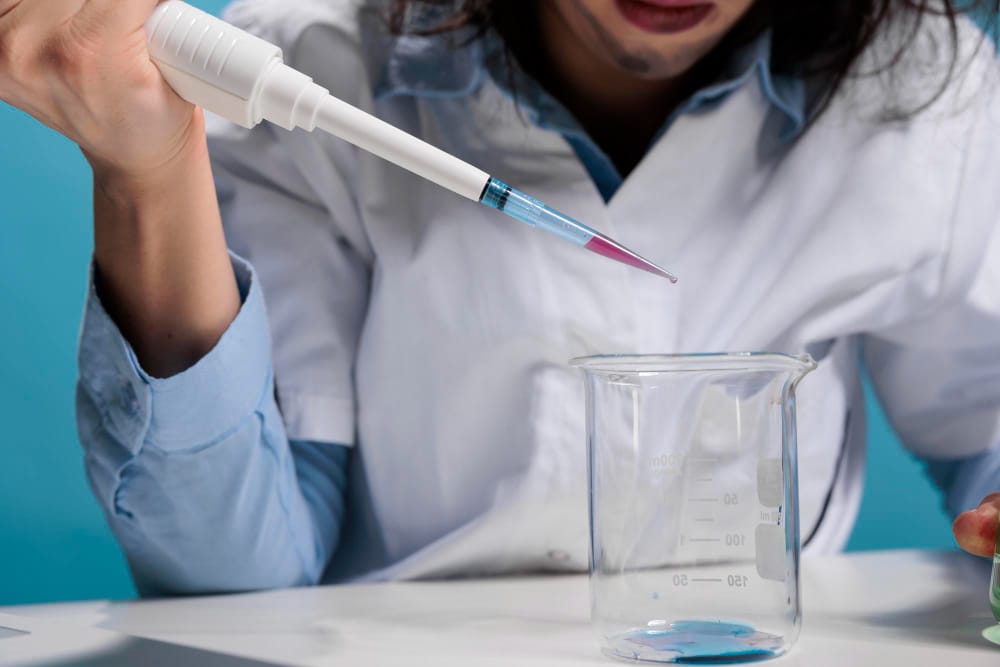
Blends can make research workflows easier, or they can make them messier. It depends on how disciplined the lab is with documentation and prep. When you move from single compounds to a combined formulation, your biggest risk is not the assay. Your biggest risk is consistency. If your team does not prepare the same concentration the same way every time, a blend can quietly become a source of variability that looks like “interesting biology” until you realize it was just a prep mismatch.
That’s why GLOW peptide blend should be approached like a standardized research input, not a casual vial you pull from storage and “make work.” If you treat it as a controlled input, it can help simplify study setup and reduce multi-vial handling errors. If you treat it casually, it can multiply the number of ways a run can drift.
If you’re sourcing the product itself, start with GLOW 70 mg and build your internal routine around traceability, stable handling, and one shared preparation standard.
What the GLOW blend is in a research context
In research conversations, GLOW is typically discussed as a combined peptide approach that centers on three widely referenced compounds: GHK-Cu, BPC-157, and TB-500. Instead of managing three separate vials, a blend is meant to give labs one consistent formulation that can be used across repeat setups, especially when teams want to observe multi-pathway behavior without juggling multiple prep steps.
That is the practical value of GLOW peptide blend: fewer moving parts in the setup, fewer opportunities for mix-ups, and a cleaner way to repeat the same input across timepoints.
If your lab likes to keep inventory streamlined, it also helps that CoreVionRx lists peptides in one catalog view, so your team can standardize purchasing and naming across the board through Peptides.
Why labs choose blends instead of mixing vials manually
Most labs do not set out to “make mistakes.” Mistakes happen because workflow gets busy. Someone reconstitutes one vial at a slightly different concentration. Someone else assumes the old standard. Another person forgets to log a lot number. Then a week later the lab is comparing two runs that are not actually comparable.
Blends reduce that risk when they are used correctly. With GLOW peptide blend, the logic is simple:
A single formulation reduces multi-vial handling.
A single prep step is easier to standardize than three separate prep steps.
A single stock reduces the chance of “we swapped one vial by accident.”
This does not eliminate the need for clean lab practice. It just removes friction points that tend to cause drift in real teams.
What “quality” means for a peptide blend
Quality is not just “high purity” printed on a page. For research workflows, quality means you can defend your inputs and reproduce your setup.
With GLOW peptide blend, quality shows up in three places:
Documentation quality
You can match the vial to the lot, and the lot to the COA, without guessing.
Handling stability
You store it consistently, you minimize exposure, and you avoid repeated warm-cold cycling that can cause degradation over time.
Preparation consistency
Everyone on the team prepares the same concentration using the same volume standard, and logs it the same way.
When those three are aligned, the blend becomes a stable input. That is exactly what you want.
How to review the COA without overcomplicating it
A COA should be easy to use. The goal is not to become a full analytical chem lab. The goal is to confirm traceability and reduce “unknowns” later.
Before you prep anything, confirm:
The lot number on the vial matches the COA lot number.
If it doesn’t match, fix that first. Nothing else matters until traceability is correct.
The COA states the analytical method.
Purity is only meaningful if it is tied to a method. Most peptide verification is presented via HPLC profiling, and the method should be clear enough to document.
The document looks lot-specific, not generic.
A COA should read like it belongs to that lot. Vague documentation makes troubleshooting harder later.
With GLOW peptide blend, that COA step matters more than people expect because you are relying on one vial as the combined input. If you ever have drift in outcomes, lot tracking is your fastest way to separate “input changed” from “biology changed.”
HPLC purity in real lab terms
HPLC is useful because it gives a profile snapshot. In plain terms, labs use it as a confidence check that the sample is dominated by the intended compound(s) rather than being full of unexpected peaks.
Still, purity verification is not a magic shield. Even very clean material can become inconsistent if it is handled inconsistently after arrival. That’s why the best labs treat HPLC as the baseline and treat the SOP as the protection plan.
For GLOW peptide blend, your SOP is what keeps the input stable across repeated use.
Storage habits that keep outcomes repeatable
Most peptide instability issues are not dramatic. They’re slow. A vial spends too long on the bench. It gets pulled from cold storage repeatedly. It gets opened casually. Then, weeks later, the lab is staring at results that don’t match earlier runs.
With GLOW peptide blend, the best storage habits are simple:
Keep exposure time short during handling.
Avoid repeated temperature cycling when multiple uses are expected.
Stay consistent with storage location and access behavior across the whole team.
If your lab has already built good routines around other products, you can keep the same approach here. For example, teams that stock single components like GHK-Cu 100mg, BPC-157, and TB-500 often apply the same discipline across all inventory: log the lot, store consistently, and keep prep notes clean.
That consistency is what prevents drift.
Reconstitution and concentration math: where most labs quietly drift
When data looks inconsistent, the cause is often basic: concentration was not the same across runs. That happens because someone used a different reconstitution volume, or someone recorded the concentration in a different unit and another person assumed the wrong conversion.
The fix is not complicated. With GLOW peptide blend, choose one standard for your project and stick to it.
A clean standard looks like this:
You decide a reconstitution volume and document it as the project standard.
You calculate the concentration once and record it in your log in the same units every time.
You label the prepared stock with product name, lot, concentration, and prep date.
You do not improvise volume from one prep to the next unless you explicitly create a new batch record.
If your team wants one shared reference so the conversions stay consistent across researchers, use Peptide Calculator as the single math standard. The tool itself is not the point. The point is that everyone uses the same method and logs the result the same way.
That is how GLOW peptide blend stays repeatable across weeks, not just across one afternoon.
Designing studies around a blend without creating hidden variables
A blend works best when the experiment is designed to keep the blend stable while varying the real variables you care about. If you change prep volume, handling behavior, or storage conditions mid-study, you create hidden variables that can look like real effects.
Common research approaches for GLOW peptide blend include:
Time-course studies
Where you want the same input across multiple timepoints.
Protocol optimization
Where the blend stays constant while you vary assay conditions or model parameters.
Blend vs single-component comparisons
Where you compare the blend to individual components under identical handling standards.
If your team wants to run comparisons, it helps to stock the individual products alongside the blend so everything stays within the same sourcing and documentation ecosystem: GHK-Cu 100mg, BPC-157, and TB-500.
The critical point is this: comparisons only mean something when the prep and handling standards are identical across all conditions.
GLOW vs KLOW: when each one makes sense for research setup
Some labs like to keep both a three-peptide blend and a four-peptide blend on hand, depending on study design. In simple terms, GLOW is often discussed around the three-component synergy idea, while KLOW adds an additional peptide into the formulation.
If your team is deciding between the two, you do not need complicated theory to pick a starting point. You need clarity on what your study is trying to observe and how many variables you want in the input.
If you want the three-peptide blend setup, use GLOW 70 mg.
If your design specifically needs the four-peptide blend, use KLOW 80 mg.
The more important point is that whichever one you choose, you keep your preparation and logging routine stable. A blend is only as clean as the routine around it.
The most common mistakes that ruin repeatability
If your results ever feel “noisy,” check these before you rewrite the protocol:
Was the reconstitution volume the same across runs?
Did the lot number change without being recorded in the experiment notes?
Was the vial repeatedly cycled in and out of cold storage?
Did multiple researchers handle the stock differently?
Were concentrations logged in different units between team members?
Those issues create drift more often than most labs want to admit. Fixing them is usually faster than redesigning the entire experiment.
With GLOW peptide blend, clean logging and consistent prep eliminate most of these problems early.

FAQs
How do we keep preparation consistent across a team?
Pick one reconstitution volume standard for the project, document it clearly, and require that everyone logs concentration using the same units and format. Using Peptide Calculator as a shared reference tool helps keep conversions consistent.
Should we track blend lots the same way we track single peptides?
Yes. Treat the blend like a primary input. Log the lot number, store the COA with the lot record, and record which lot was used for each run.
What internal pages help with general purchasing questions?
For general site guidance, use FAQs. For browsing all products and keeping inventory organized, use Peptides.
Closing: keep the input stable and the data gets cleaner
The biggest advantage of GLOW peptide blend is that it can reduce multi-vial setup complexity and make repeat studies easier to run. But it only works if the lab treats it as a controlled input: lot tracking, COA verification, stable storage, and one preparation standard everyone follows.
If you want to build a clean, repeatable workflow, start with GLOW 70 mg, standardize your concentration math with Peptide Calculator, and keep your team’s documentation habits tight. When the input stays stable, your outcomes become easier to interpret and far easier to reproduce.